
Introduction
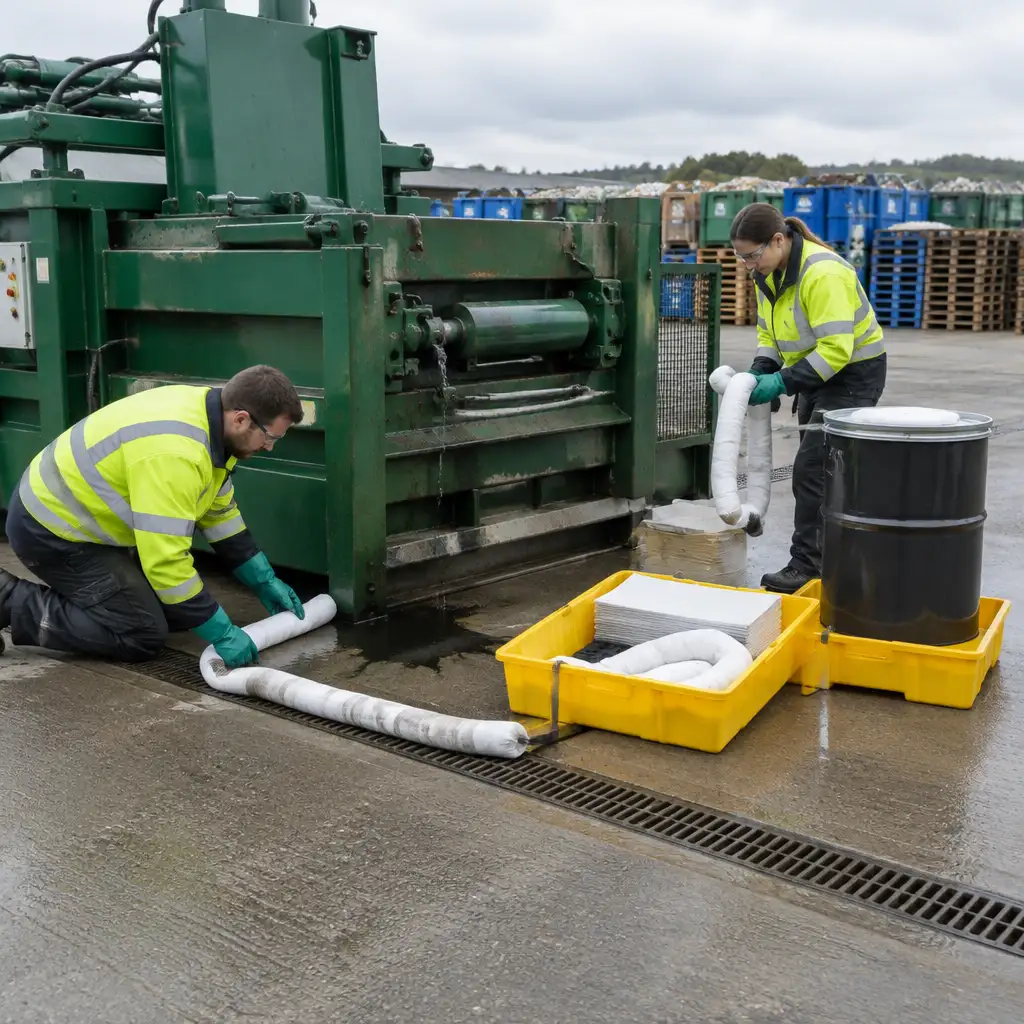
Hydraulic fluid leaks from balers and compactors are a common but serious issue at Irish sites. A leak can present safety hazards for staff, create slip risks, contaminate drains and soil, and lead to extended machine downtime if not managed correctly. This guide provides a practical, step-by-step approach for the immediate response to hydraulic leaks, tailored to the needs of businesses across Ireland.
We will cover immediate actions operators should take on discovering a leak, environmental controls to limit contamination, safe working methods for onsite teams, short-term temporary repairs to keep equipment safe, and when to call an emergency technician. The aim is to help you contain and clean up effectively while protecting people, the environment and your operations.
The guidance here reflects Baleforce Ireland’s practical, repair-first philosophy and 20+ years of industry experience. Use it as an operational checklist for incidents, and contact qualified service providers for any repair beyond routine containment and cleanup.
- Introduction
- Immediate actions on discovering a hydraulic leak
- Containment and environmental controls
- Safe working methods and PPE
- Short-term mitigation and temporary repairs
- Cleanup, absorbents and waste disposal in Ireland
- Minimising downtime and communicating with stakeholders
- Frequently asked questions
Immediate actions on discovering a hydraulic leak
Safety and rapid containment are the priorities the moment a leak is discovered. First, isolate power to the baler or compactor by using the machine isolator or emergency stop. Do not attempt repairs with the machine live. Stopping the machine prevents further pumping of hydraulic fluid and reduces the chance of sudden pressure-related failures.
Second, cordon off the area and prohibit access by unauthorised staff. Place warning signs and safety cones around the spill zone to prevent slips and falls. If the leak has reached a public drain or an environmentally sensitive area, take immediate steps to protect waterways by blocking run-off and notifying your environmental officer or site manager.
Third, identify the source where possible without removing guards or working under stored energy. If the leak is from a visible hose, fitting or cylinder, note its location and severity to brief a technician. Photograph the scene for incident records and for later repair planning.
Containment and environmental controls
Effective containment prevents a small leak turning into a regulatory or environmental incident. Keep a suitable spill kit accessible near balers and compactors; a kit should include absorbent pads, socks, granular absorbent, a disposal bin or bag for contaminated materials, disposable gloves, eye protection and a plastic shovel or scoop.
Place absorbent socks or booms around the source to stop spread across the floor and to drains. Where possible, use drip trays under fixed hydraulic connections or beneath leaking cylinders to capture fluid while you organise the next steps. If the leak reaches a drain, immediately plug or isolate the drain using designated drain covers from your spill kit and contact your environmental lead and the EPA if necessary.
Control ventilation if working indoors and ensure good lighting to inspect the leak. Environmental control also includes preventing cross-contamination of other materials; move nearby combustible or oily items away from the spill zone, and avoid using water to dilute or wash hydraulic fluid into drains.
Safe working methods and PPE
Working around hydraulic fluid requires correct personal protective equipment and safe methods. At minimum, wear chemical-resistant gloves, eye protection and safety footwear. Where there is a risk of splashing or extended handling, wear a disposable coverall and a face shield. Ensure all staff involved are trained in spill response and that an appointed responsible person coordinates the operation.
Never attempt to tighten live hydraulic fittings or use bare hands to catch leaking fluid. Hydraulic systems can contain stored energy; a pressurised spray can cause injury. De-pressurise the system only if you are trained to do so and have isolated the machine according to its lock-off procedure. If stored energy is suspected in accumulators or the system, treat the area as hazardous and call an emergency technician.
Use tools that are clean and designated for oil-handling tasks to avoid ignition risks. Keep ignition sources away from pooled fluid, and ensure fire extinguishers suitable for oil fires (Class B) are accessible. Record the incident and the PPE used in your site safety log for compliance and learning.
Short-term mitigation and temporary repairs
Temporary repairs are about making the machine safe and limiting further fluid loss until a qualified technician can perform a permanent fix. Common temporary measures include placing drip trays beneath the leak, clamping a leaking hose with a purpose-made clamp or using an approved hydraulic hose repair sleeve. These actions should be temporary and carried out only by competent personnel with the machine de-energised.
For cylinder leaks, it may be possible to isolate the affected circuit using manual shut-off valves or movement stops in the control panel. Do not weld, use unsuitable adhesives or tape on hydraulic fittings; improvised methods often fail and can worsen damage. If a hose has burst or a fitting has failed catastrophically, plan for controlled removal and safe transport of the damaged component for replacement.
Communicate the temporary repair measures in writing to maintenance staff and note any operational limitations imposed on the machine. If you need help deciding whether a temporary repair is permissible, arrange an emergency site visit from a specialist. For emergency repairs and rapid diagnosis, our breakdown and emergency repairs service is available nationwide.
Cleanup, absorbents and waste disposal in Ireland
After containment and any temporary repair, the next priority is correct cleanup and waste handling. Use absorbent pads and granular absorbent to pick up pooled hydraulic fluid. Sweep up used granular absorbent with a plastic scoop and place it into an appropriate sealed container or labelled hazardous waste bin provided in your spill kit. Avoid using water; washing emulsifies oil and risks discharging into drainage.
In Ireland, contaminated absorbents, oily rags and waste hydraulic oil are classified as waste and often as hazardous waste depending on the contamination level. These materials must be collected by an authorised waste collector and disposed of at licensed facilities. Contact your usual waste contractor or a hazardous waste specialist to arrange collection. If in doubt, retain materials on-site in secure, labelled containers until they can be removed.
Keep incident records including the quantity of fluid spilled, materials used in cleanup, and the waste carrier details. These records are important for demonstrating due diligence to the EPA and to your own audit trails. For guidance with ongoing servicing and safe disposal planning, consider a free machinery assessment to review site procedures and machine condition.
Minimising downtime and communicating with stakeholders
Minimising downtime means balancing safe containment with swift repair. While temporary measures limit fluid loss, arrange emergency diagnostic support quickly to identify the root cause: failed hose, corroded fitting, worn seal or component fatigue. Early diagnosis prevents repeat leaks and can reduce time out of service.
Communicate clearly with internal stakeholders such as operations, health & safety and facilities management. Provide estimated repair windows and any operational restrictions. For clients and external customers, give honest, practical updates about service availability and any contingency plans, such as diverting waste to an alternative compactor or using a rental unit to maintain continuity.
If the repair requires specialist parts or a major rebuild, discuss options with your service provider that follow the Baleforce decision framework: repair if practical, upgrade if beneficial, replace when justified. Our field teams specialise in practical emergency baler and compactor support and can advise on short-term rental or hire if you need to maintain throughput while repairs are completed. See our page on machinery service and repairs for typical response and repair services.
Frequently asked questions
Q: How quickly should I call an emergency technician for a hydraulic leak?
A: Call an emergency technician immediately if you cannot safely isolate the leak, if there is significant fluid loss, if the leak threatens drains or watercourses, or if stored hydraulic energy is suspected. For rapid response, use a specialist emergency repair service.
Q: What should go in an onsite spill kit for balers and compactors?
A: A suitable kit should include absorbent pads and socks, granular absorbent, disposable gloves and coveralls, eye protection, a plastic shovel, labelled disposal bags or a sealed bin, and drain covers. Keep the kit near machines and ensure staff know where it is.
Q: Who removes contaminated absorbents and oil waste in Ireland?
A: Contaminated absorbents and used hydraulic oil should be collected by an authorised hazardous waste contractor and taken to licensed disposal facilities. Retain documentation of the waste transfer for compliance and audit purposes.
Need support with waste handling equipment anywhere in Ireland? Baleforce Ireland provides nationwide service, repairs, machinery assessments, upgrades, operator training, and technical support, with faster response times throughout Leinster. Call 087 458 0610 or email info@baleforceireland.ie to get started.