
Introduction
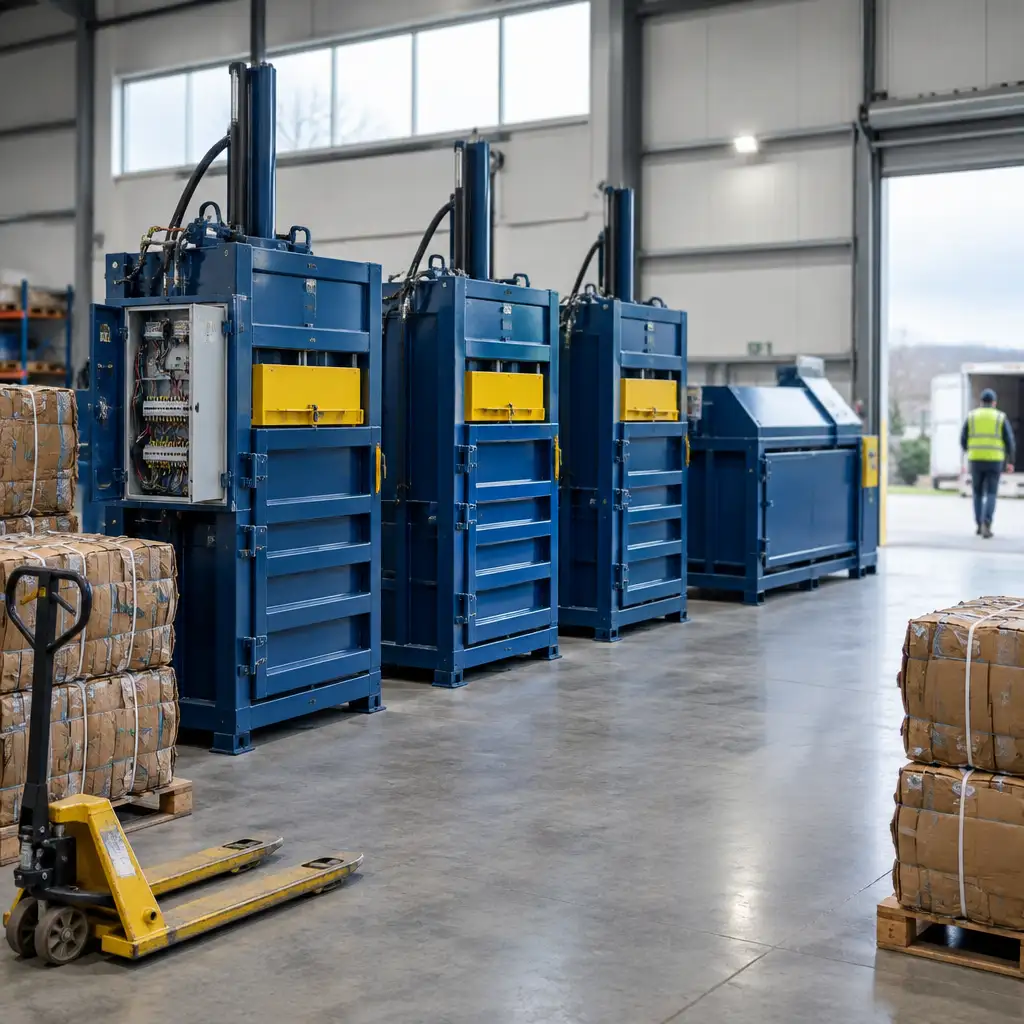
Choosing whether to repair, refurbish or replace a baler or compactor is a common dilemma for facilities managers, waste contractors and sustainability leads across Ireland. The decision affects capital budgets, operating costs, downtime, safety and — increasingly important — lifecycle carbon emissions. This article analyses the financial and carbon impacts of each option and provides a practical framework to guide decisions for Irish organisations.
We approach the subject from a service-first perspective: repair where practical, upgrade where beneficial and replace when justified. The analysis below uses straightforward total cost of ownership (TCO) examples and simple carbon estimates to make comparisons tangible. The intention is to equip you with a repeatable decision checklist rather than prescribe a single answer for every situation.
The article covers how to compare direct costs and hidden costs, how refurbishment changes performance and emissions, when replacement is sensible, and how to use a decision framework for safety, reliability and long-term value. Practical links to assessments, servicing and refurbishment options are included so you can follow up with a free machinery assessment or arrange practical repairs.
- Introduction
- Understanding lifecycle costs for balers and compactors
- Quick carbon basics for balers and compactors
- Repair: costs, carbon and when to choose it
- Refurbishment: costs, carbon and when to choose it
- Replacement: costs, carbon and when to choose it
- Decision framework and checklist
- Frequently Asked Questions
Understanding lifecycle costs for balers and compactors
Lifecycle cost is the total cost of owning and operating a piece of equipment over its useful life. For balers and compactors this includes purchase price or capital cost, installation, scheduled servicing, unscheduled repairs, parts, operator training, energy consumption, downtime costs and disposal or resale value. Organisations that track TCO can compare options on a like-for-like basis instead of relying solely on upfront price.
Once you include indirect costs — lost productivity during breakdowns, rental machines while equipment is out of service, and the management time spent coordinating repairs — the gap between repairing and replacing can look different. Preventative maintenance and prompt repairs tend to reduce long-run costs by avoiding catastrophic failures and extending life. Baleforce Ireland offers machinery servicing and repairs that focus on minimising these hidden costs while improving reliability.
Below we use a simplified TCO model across a five-year period to compare typical paths. The numbers are indicative; every site should run its own inputs. Key variables are machine age, current condition, expected remaining life, energy efficiency, parts availability and availability of skilled servicing. For a tailored view, a free machinery assessment will identify the precise variables for your machine.
Quick carbon basics for balers and compactors
When we discuss lifecycle carbon, we consider embodied carbon (the emissions from manufacturing and transporting a new machine), embodied carbon in replacement parts, and operational carbon (the emissions from electricity or fuel used in operation and servicing). For many waste-handling machines the largest single carbon cost is embodied in a new unit; that means extending an existing machine’s life through repair or refurbishment can be beneficial from a carbon perspective.
Operational carbon depends on energy use and duty cycle. A compact compactor running continuously will have substantially higher operational emissions than an intermittently used baler. Where replacement reduces energy consumption significantly (for example, a new variable-speed drive versus an old fixed-speed motor), operational savings can offset some embodied carbon within a few years. Each case requires a simple estimate: kWh per year multiplied by grid carbon intensity gives annual operational CO2e.
For a rough reference, use Ireland’s grid average carbon intensity (varies year-to-year; check the latest EPA or SEAI figures). For small office/retail balers, embodied carbon savings from repair/refurbish are often decisive. For heavy-duty compaction with large energy use, energy-efficient replacement may be preferable. We provide simple calculations in the TCO examples below to illustrate how carbon and cost interact.
Repair: costs, carbon and when to choose it
Repair means fixing the specific fault and returning the machine to safe, reliable operation. Typical repairs include hydraulic hose replacement, cylinder refurbishment, control panel fault diagnosis, sensor replacement and safety interlock repairs. Repairs are usually the lowest-cost immediate option and have the smallest incremental embodied carbon impact because you are not manufacturing a new machine.
Financially, repairs are attractive when the machine is structurally sound, part availability is good, and the repair restores expected reliability. Repairs also reduce downtime compared with full replacement. However, repeated repairs on ageing machines may become expensive and unpredictable. Track cumulative repair costs: if annual repair costs approach a significant fraction (for example 20–30%) of a replacement cost, replacement or refurbishment merits closer consideration.
From a carbon perspective, repairs are often the best option. Replacing wearable components or retrofitting more efficient controls typically creates much less embodied carbon than a new machine. Baleforce Ireland’s breakdown and emergency repairs service supports fast diagnosis and practical repair recommendations to avoid unnecessary replacements while restoring safety and performance.
Refurbishment: costs, carbon and when to choose it
Refurbishment sits between repair and replacement. It typically includes replacement of worn structural parts, hydraulic seals and hoses, repainting, control upgrades, safety retrofits and reconditioning of key components. The result is a machine that approaches the reliability and appearance of new equipment at a lower cost and lower embodied carbon than a full replacement.
Refurbishment is a strong option when the machine has solid structural life left but needs a comprehensive programme to restore reliability and safety. It is especially relevant when spare parts are available, and when upgrades (for example modern control systems or safety features) can extend useful life by several years. Refurbished machines can be a cost-effective alternative to new purchases; Baleforce Ireland offers used and refurbished machinery as part of equipment solutions for organisations seeking value.
Carbon-wise, refurbishment reduces the need for a new unit and therefore lowers the embodied carbon footprint per year of future operation. Where refurb includes efficiency upgrades, it can also lower operational emissions. For many sites, the best sustainability outcome is refurbishment combined with a maintenance programme to capture both carbon and cost savings over time.
Replacement: costs, carbon and when to choose it
Replacement means buying new equipment and disposing of the old unit. It is the most capital-intensive option and carries the highest embodied carbon. Replacement is usually justified when safety or regulatory compliance cannot be restored cost-effectively, when the existing machine is near the end of its useful life, or when a new model offers substantial operational savings or capability improvements that materially reduce total cost of ownership.
Replacement is sensible when energy efficiency gains are large, when the total cost of ongoing repairs exceeds the economics of a new unit, or when capacity/throughput requirements have changed. For organisations that can reclaim VAT or access leasing, replacement may also be attractive on cashflow grounds. Baleforce Ireland supplies Europress equipment and can advise on suitable new units where justified.
Do not overlook disposal and resale: proper disposal reduces environmental risk and resale of used machines offsets some replacement cost and embodied carbon. In many cases a used or refurbished replacement is a practical middle ground if a brand new unit is not strictly necessary; see our used and refurbished machinery options for details.
Decision framework and checklist
Use this practical checklist to frame a decision. Start with a free machinery assessment to collect facts about condition, safety, efficiency and remaining life:
- Safety first: are there any unresolved safety faults or missing interlocks? If yes, repair or remove machine from service immediately.
- Reliability: how frequent are breakdowns and how long is average downtime? High and growing downtime points to refurbishment or replacement.
- Cost tracking: total the last three years of repairs and servicing. If annual repair spend is rising towards 25% of replacement cost, consider refurbishment or replacement.
- Energy use: estimate kWh/year and compare with new options. Large operational savings favour replacement.
- Parts and support: are parts available and is skilled servicing local? If parts are scarce, replacement may be necessary.
- Lifecycle carbon: if embodied carbon is a concern, prioritise repair/refurbishment where safe and practical.
- Business changes: changed throughput, waste composition or regulations may require replacement for capabilities rather than cost alone.
For a practical next step, arrange a free machinery assessment to get measured inputs for the checklist and a clear recommendation. You can also explore targeted refurbishment packages or new equipment options depending on the assessment outcome. Baleforce Ireland’s machinery assessment service is free of charge and aimed at producing honest, practical advice aligned with long-term value.
Frequently Asked Questions
Q: How do I calculate the total cost of ownership for my baler or compactor?
A: Add capital cost (or replacement value), installation, annual energy cost (kWh × grid carbon intensity if including carbon), scheduled servicing, average annual repair spend, downtime costs (labour and lost productivity), training and disposal/resale value. Run the numbers over a standard period (commonly five years) for comparison.
Q: Will refurbishing reduce carbon emissions compared with buying new?
A: Generally yes. Refurbishment has a much lower embodied carbon cost than manufacturing a new machine. If refurbishment also includes efficiency upgrades that reduce energy use, operational carbon will fall too.
Q: When should I call a technician rather than plan replacement?
A: Call for a machinery assessment and prompt repairs whenever safety is affected, when downtime disrupts operations, or when faults first appear. Early diagnosis and preventative repairs often avoid unnecessary replacement and reduce long-term costs.
Not sure whether your equipment should be repaired, upgraded, or replaced? Baleforce Ireland offers honest, practical advice backed by over 20 years of industry experience. We focus on helping customers make informed decisions based on safety, reliability, and long-term value. Contact us at 087 458 0610 or info@baleforceireland.ie to discuss your options.