
Introduction
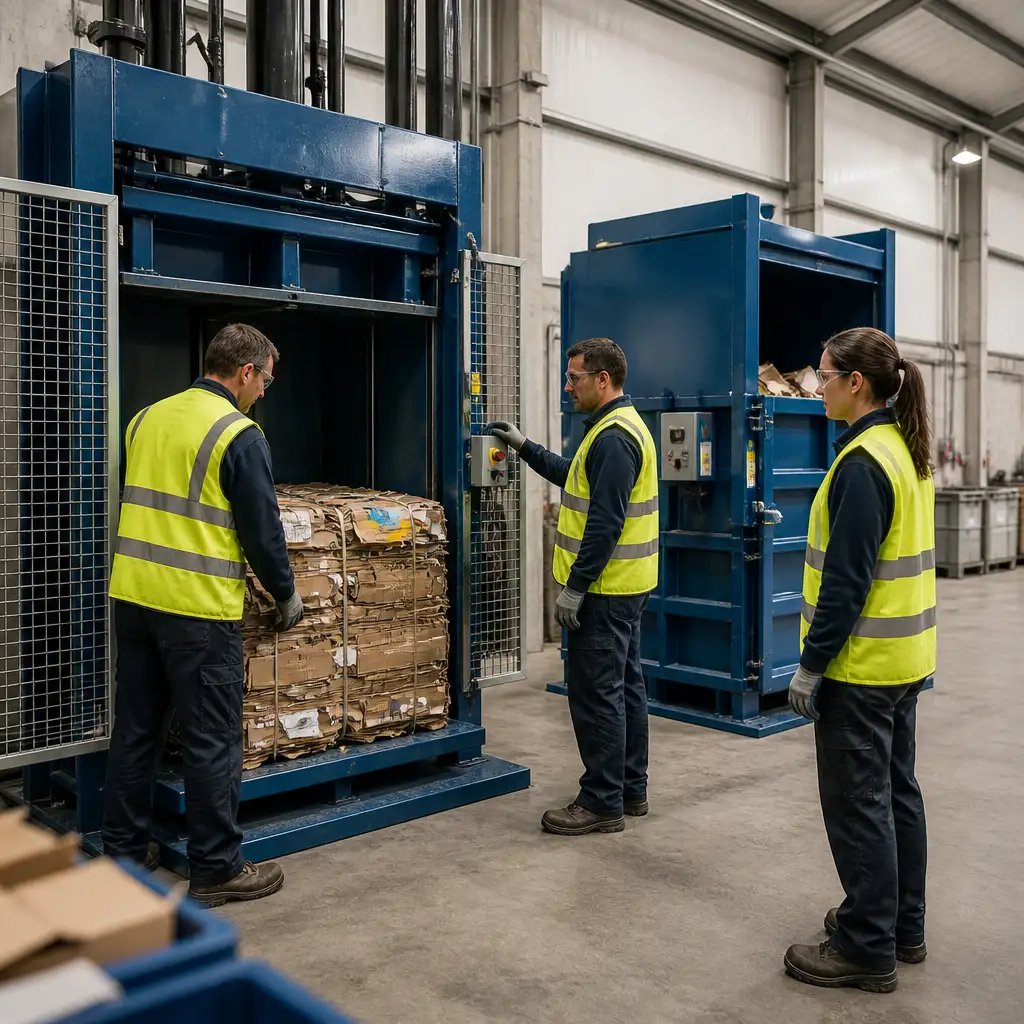
Well-designed operator training is a simple, cost-effective way to reduce downtime, improve safety and extend the working life of balers and compactors. This article lays out a practical, step-by-step training programme for baler and compactor operators in Ireland, with clear induction steps, competency checks, refresher schedules and a sample training checklist you can adapt for your site.
We focus on realistic, hands-on content rather than theoretical jargon — the sort of training that prevents misuse, reduces breakdowns and supports maintenance teams. Whether you manage a distribution centre in Leinster or a retail site elsewhere in Ireland, this guidance is intended to be practical and immediately implementable.
Readers will find a full training syllabus, suggested assessment criteria, sample checklists and guidance on scheduling refresher training. There are also links to relevant equipment pages and how to request a site machinery assessment if you need a tailored plan.
- Introduction
- Why operator training matters
- Induction syllabus for baler and compactor operators
- Competency assessment: standards and criteria
- Practical exercises and sample training checklist
- Refresher schedules, records and re-assessment
- How training reduces misuse and extends equipment life
- Frequently Asked Questions
Why operator training matters
Operator training is more than ticking a compliance box. Well-trained operators follow safe work methods, report faults early and operate equipment within its design limits. This lowers the risk of accidents and reduces the mechanical stress that leads to hydraulic and electrical failures.
For Irish businesses, the benefits are tangible: fewer emergency call-outs, lower repair costs and improved uptime. Baleforce Ireland’s experience shows that sites with a structured training programme see fewer repeat faults and longer intervals between major repairs.
Training also supports a repair-before-replacement approach. When operators respect safe operating procedures and basic maintenance checks, small faults are flagged and fixed before they cause catastrophic damage that forces replacement.
Induction syllabus for baler and compactor operators
A clear induction syllabus sets expectations from day one. The induction should combine classroom briefing, manufacturer’s safety material and supervised practical sessions on the actual machinery used at your site — whether that is a cardboard baler or a waste compactor. Include an introduction to the specific model; for Europress equipment, ensure operators understand manufacturer guidance alongside site procedures.
Key induction topics should include machine anatomy, safe start-up and shutdown, correct loading and material separation, emergency stop procedures, isolations and lock-off, and how to report faults. Make time for a session on basic daily checks and the location of isolators, fuses and emergency controls.
Inductions should be site-specific. A baler in a busy retail backroom requires different loading and housekeeping habits compared to a compactor in an industrial unit. Ensure the induction references the relevant equipment pages such as balers and compactors so operators can review manufacturer and supplier guidance.
Competency assessment: standards and criteria
Competency assessment verifies that an operator can perform tasks safely and consistently. Use a combination of observation, verbal questioning and a short practical task to confirm competence. Assessments should be recorded and retained by the site manager or safety officer.
Suggested assessment criteria include correct isolation and lock-off, safe loading technique, understanding of the control panel and fault indicators, ability to respond to emergency stop activation, and completion of basic daily maintenance checks. Include scenario-based questions such as how to handle a trapped jam or hydraulic oil leak.
Assessors should be experienced technicians or supervisors with a clear checklist. Where possible, involve your maintenance provider — for example, linking assessments with your preventative maintenance regime or using a free machinery assessment to identify common operator errors and site-specific hazards before finalising assessment criteria.
Practical exercises and sample training checklist
Hands-on practice cements learning. Practical exercises should include a supervised run-through of start-up/shutdown, loading materials safely, clearing minor jams under supervision, and performing the daily pre-shift checks. Rotate operators through multiple tasks to ensure broad competence across the team.
Below is a sample training checklist you can adapt. Use it during induction and as part of the competency assessment. Keep completed checklists on file for audit and follow-up training planning.
| Item | Pass/Fail | Notes |
|---|---|---|
| Pre-shift visual inspection (hydraulic lines, guards, controls) | ||
| Correct isolation and lock-off procedure | ||
| Start-up and safe operation (controls, indicators) | ||
| Material loading technique (no overloading, correct segregation) | ||
| Emergency stop and restart procedure | ||
| Basic housekeeping and spill management around machine | ||
| Fault reporting (who and how to report) | ||
| Practical jam-clearing under supervision |
Train assessors to score each item objectively and to include corrective actions for any failed items. Use completed checklists to decide whether an operator should be signed off or given further supervised practice.
Refresher schedules, records and re-assessment
Refresher training protects skills and updates operators on changes to equipment or procedures. A sensible schedule is an initial re-assessment at three months after induction, then annual refreshers for routine sites. High-turnover or high-risk environments may need six-monthly refreshers.
Refresher content should cover common faults observed in service history, any recent safety incidents, and changes following upgrades or retrofits. For machines that have had control upgrades or safety retrofits, ensure operators receive training specific to those changes before the machine returns to service.
Record keeping is essential. Maintain a log with induction dates, assessment results, refresher attendance and any follow-up actions. These records support compliance, help plan maintenance budgets, and make it easier to identify trends prompting further training or equipment assessment by a service partner such as Baleforce Ireland’s machinery service and repairs team.
How training reduces misuse and extends equipment life
Operator misuse is a leading cause of premature wear on hydraulic seals, cylinders and control systems. Training reduces misuse by teaching correct loading practices, preventing over-pressurisation, and ensuring operators do not bypass safety interlocks.
When operators perform regular pre-shift checks and report minor faults promptly, maintenance teams can repair small issues before they escalate into major failures. This aligns with a repair-before-replacement philosophy that saves organisations money and reduces waste.
Investing in training also improves relationships between operators and service teams. Operators who understand basic fault symptoms can provide useful information to technicians, making diagnosis faster and repairs more accurate. If you’re unsure about the condition of your equipment, consider arranging a machinery assessment or reviewing equipment solutions for potential upgrades.
Frequently Asked Questions
Q: How long should initial baler operator training take?
A: A typical induction lasts half a day for experienced staff and a full day for new operators. Practical supervised operation is essential and may require additional sessions until competence is demonstrated.
Q: Who should carry out competency assessments?
A: Assessments should be done by qualified supervisors or technicians familiar with the equipment; where available, involve your service provider for impartial evaluation.
Q: How often should refresher training occur?
A: For most sites, an initial re-assessment at three months then annual refreshers is appropriate. High-risk or high-turnover sites may need six-monthly refreshers.
Need support with waste handling equipment anywhere in Ireland? Baleforce Ireland provides nationwide service, repairs, machinery assessments, upgrades, operator training, and technical support, with faster response times throughout Leinster. Call 087 458 0610 or email info@baleforceireland.ie to get started.