
Introduction
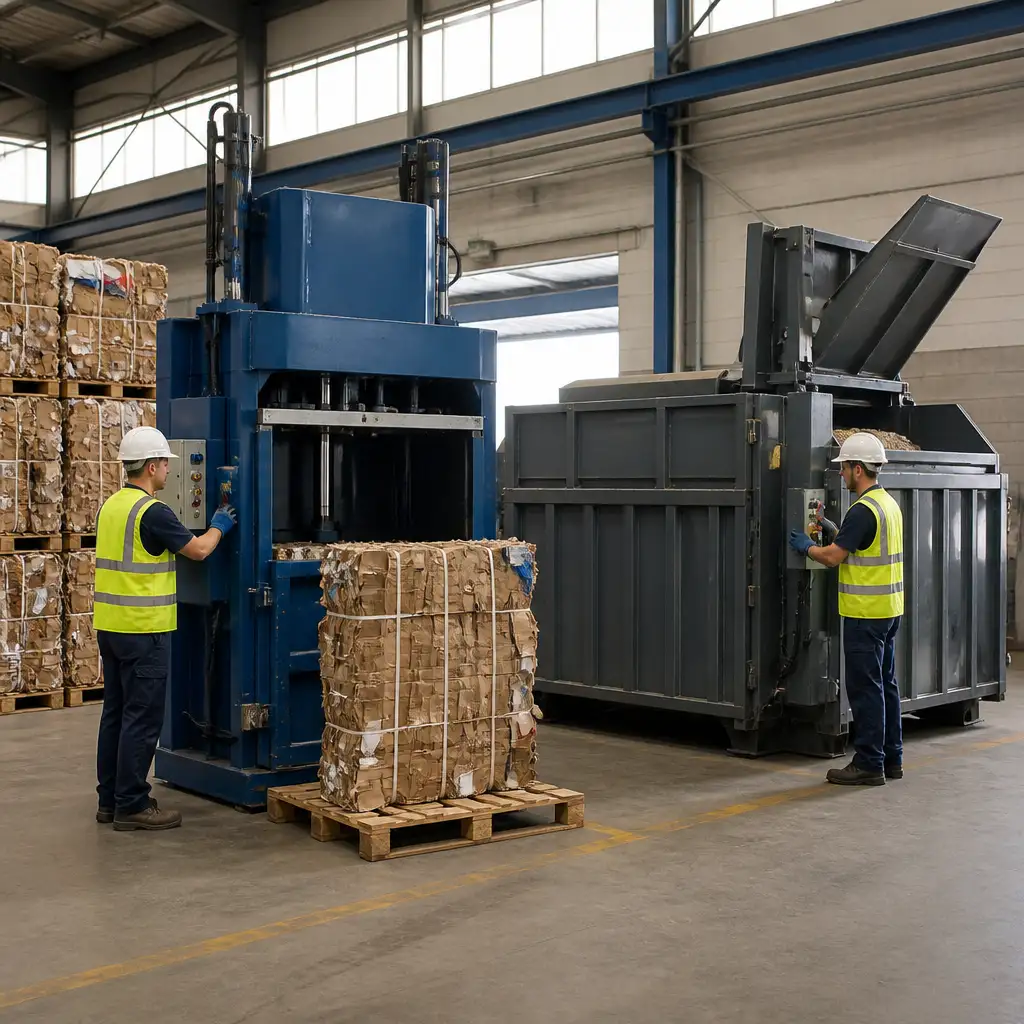
Managing waste disposal costs is a major line-item for Irish warehouses and distribution centres. With landfill levies, haulage charges and recycling fees on the rise, operational teams must adopt data-driven strategies to reduce spending while maintaining compliance and safety. This article explains how balers and compactors can be used to lower costs and improve return on investment (ROI).
We focus on measurable approaches: which key performance indicators (KPIs) to track, how to optimise bale density, and how servicing schedules and preventative maintenance avoid expensive breakdowns. The guidance is practical and applicable across warehouses, logistics centres and manufacturing sites across Ireland.
Throughout you will find templates and worked examples you can adapt, as well as links to relevant resources for equipment, servicing and assessments. The aim is to give facility managers and operations teams concrete steps to lower waste disposal costs while improving equipment reliability and uptime.
- Introduction
- Current cost drivers and how to analyse them
- How balers and compactors reduce disposal spend
- KPI templates for tracking savings and performance
- Optimising bale density and material handling
- Servicing schedules to avoid costly breakdowns
- ROI calculations and real-world savings examples
- Frequently asked questions
Current cost drivers and how to analyse them
Before making equipment decisions, gather baseline data. Typical cost drivers in Irish warehouses include haulage per collection, number of collections per week, disposal gate fees, sorting labour and storage space occupied by loose recyclables. Capture a 90-day snapshot to understand seasonal variance and unusual peaks.
A simple waste-cost audit should record material type, weight or volume per collection, collection frequency, transport cost and disposal cost. For mixed materials (cardboard, plastic film, wood), break the audit into categories so you can target high-cost streams first. This audit forms the basis for KPI tracking and ROI modelling.
Use the primary metric of total waste disposal cost per pallet slot or per 1,000m2 of warehouse space. This ties waste costs to operational footprint and makes comparisons meaningful when you consider investments in balers or compactors.
How balers and compactors reduce disposal spend
Balers compress recyclable materials — typically cardboard, plastic film and other fibres — into dense bales that reduce transport frequency and lower haulage costs. Compactors handle general waste and loose recyclables, reducing their volume before collection. Both reduce the number of vehicle trips and the labour needed to handle loose material.
Choosing between a baler and a compactor (or using both) depends on waste streams and operational flow. Cardboard-heavy operations often see fast payback from balers because many recycling contractors pay for dense bales or charge lower collection fees. For mixed general waste, compactors reduce skip and bin rotation and can reduce health and safety risks from overflowing containers.
For details on product selection and specifications, review Baleforce Ireland’s dedicated compactor information and baler options. Where equipment is already in use, consider a free machinery assessment to confirm whether repairs or optimisations will improve performance before buying new machines.
KPI templates for tracking savings and performance
Track a small set of KPIs weekly and monthly to measure impact. Recommended KPIs include: cost per collection, collections per week, tonnes compacted or baled, bale density (kg/m3), collection cost per tonne and downtime hours caused by equipment faults. These metrics let you quantify savings and spot trends.
Below is a simple KPI table you can use as a template. Adapt the fields to your operation and record entries weekly. The table focuses on actionable metrics that feed directly into cost calculations.
| KPI | Metric | Frequency | Target |
|---|---|---|---|
| Total waste disposal cost | € per week | Weekly | Reduce 10% Y/Y |
| Collections | Number per week | Weekly | Reduce via densification |
| Tonnes baled/compacted | Tonnes per month | Monthly | Increase 5% with optimisation |
| Bale density | kg/m3 | Per bale | Increase by 10% |
| Equipment downtime | Hours per month | Monthly | Keep < 2% availability loss |
Use these KPIs alongside cost data to build a dashboard. Regular review meetings with operations, waste contractors and maintenance teams will keep targets realistic and achievable.
Optimising bale density and material handling
Bale density is one of the most important levers for reducing haulage and disposal costs. Denser bales mean fewer loads and lower transport cost per tonne. To improve density, review feed method, pre-processing (flattening boxes), and baler settings. Simple operator training can significantly improve pack patterns and density without expensive hardware changes.
Measure density by weighing representative bales and calculating mass per bale volume. A worked example: a cardboard bale measuring 1.2m x 0.8m x 0.9m has a volume of 0.864m3. If it weighs 220kg, density = 220 / 0.864 = 254.6 kg/m3. If you increase density to 280 kg/m3 through better packing and pressure settings, you carry more material per vehicle and cut collections.
In addition to bale density, review internal logistics: positioning balers near packing areas, ensuring a steady feed to avoid overfilling, and using compactors for residual loose waste. Small layout changes can reduce handling time and avoid double-handling costs.
Servicing schedules to avoid costly breakdowns
Unplanned downtime is expensive. A single breakdown can stop baling or compacting for hours, increase manual handling and raise disposal costs by forcing extra collections. A preventative maintenance programme reduces the likelihood of these incidents and extends equipment life — consistent with the Baleforce Ireland philosophy of repair before replacement.
Set a servicing schedule based on hours operated and material type. Typical items in a servicing checklist include hydraulic oil condition, wear on compaction rams, electrical control checks, safety interlocks and sensor calibration. Document each service and track mean time between failures (MTBF) to spot trends that indicate larger interventions are needed.
If you do encounter sudden faults, have a clear escalation path. Baleforce Ireland provides breakdown and emergency repairs across the country with faster response times in Leinster. Consider a maintenance contract to lower lifetime costs and reduce emergency call-outs.
ROI calculations and real-world savings examples
ROI modelling helps justify equipment or service investments. The basic ROI formula is (Annual Savings – Annual Costs) / Capital Cost. Savings come from reduced collection fees, reduced labour for handling loose material, lower waste contractor charges, and possible income from recyclable material sold as dense bales.
Worked example: a medium-sized warehouse spends €24,000/year on waste collections (haulage and tipping). After installing a baler and optimising bale density, collections fall by 40%, saving €9,600/year. Annual servicing and consumables cost €2,000. Capital cost of a baler (or lease cost equivalent) is €15,000. ROI = (€9,600 – €2,000) / €15,000 = 0.506 or 50.6% in the first year, with payback in under two years.
When modelling ROI, include indirect savings: reduced floor space for waste storage, lower insurance or safety incident risk, and fewer man-hours spent on waste handling. Use the KPI templates earlier to ensure your assumptions are grounded in measured data from your site.
Frequently asked questions
Q: How quickly will a baler or compactor reduce our waste disposal costs?
A: Typical payback ranges from 12 to 36 months depending on waste volumes, current collection frequency and how effectively bale density is improved. Use a short baseline audit to model expected savings.
Q: What maintenance is essential to avoid breakdowns and keep costs down?
A: Regular hydraulic checks, oil changes, electrical inspections and sensor calibrations are essential. A preventative maintenance programme reduces emergency call-outs and extends equipment life. For service and repairs, consult specialist machinery service and repairs providers.
Q: Should we repair existing equipment or buy new machines?
A: Follow a decision framework: repair if practical, upgrade where beneficial, replace when justified. A free machinery assessment can determine whether repairs, retrofits or replacement will deliver best long-term value.
Not sure whether your equipment should be repaired, upgraded, or replaced? Baleforce Ireland offers honest, practical advice backed by over 20 years of industry experience. We focus on helping customers make informed decisions based on safety, reliability, and long-term value. Contact us at 087 458 0610 or info@baleforceireland.ie to discuss your options.