
Introduction
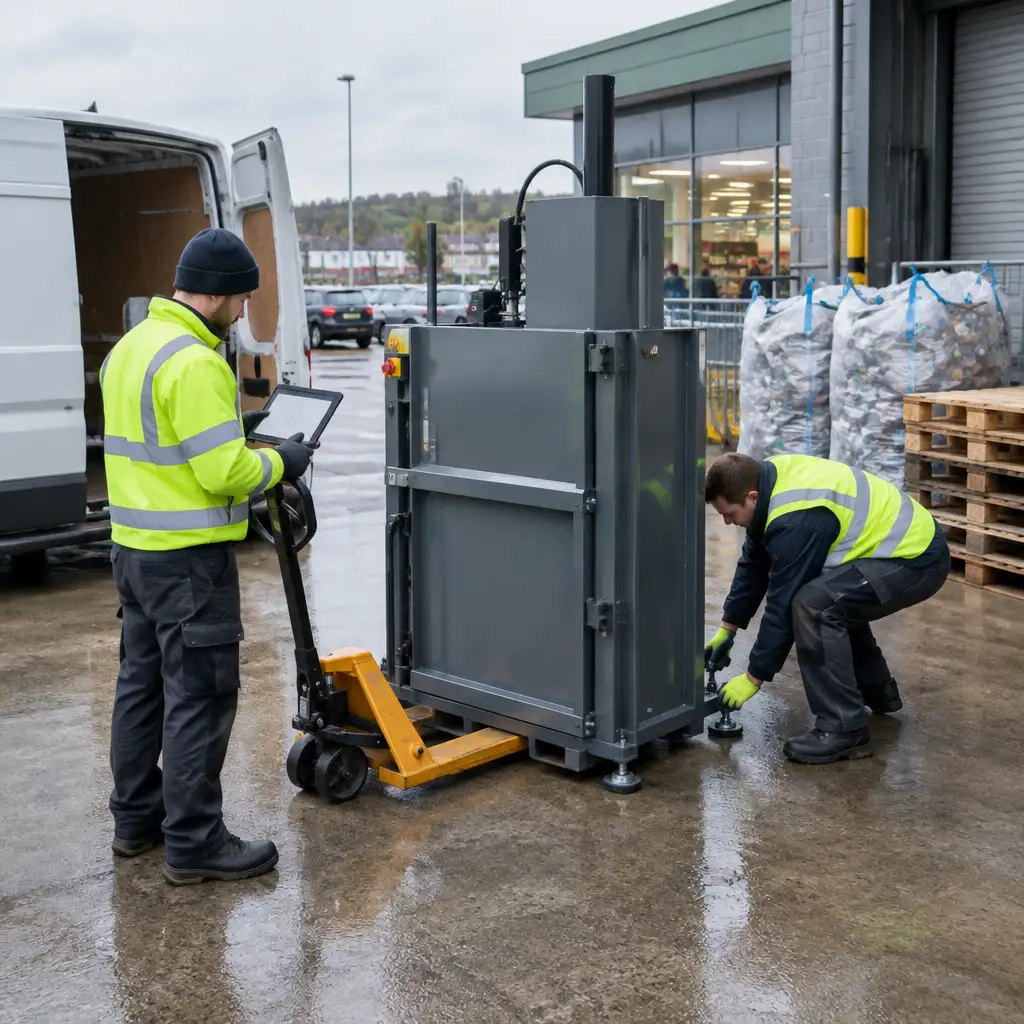
Peak trading periods—whether Christmas trade for retail, festival weekends for hospitality, or bank-holiday spikes for food service—bring predictable increases in waste volumes and pressure on balers and compactors. For many businesses in Ireland the practical question is not simply which machine to choose, but how to ensure continuity when volumes surge or when equipment fails. This article sets out a clear decision framework for short-term hire, leasing and buying (new or refurbished) balers and compactors with an emphasis on continuity, cost and a repair-first planning approach.
Baleforce Ireland draws on over 20 years of practical industry experience and a repair-before-replacement philosophy. The guidance here explains when hiring is the sensible short-term fix, when a lease makes operational sense, and when owning new or refurbished equipment is the most cost-effective long-term choice. It also covers timelines for hire, cost comparison examples, and how to use hire effectively during breakdowns.
Use this article as a practical reference when preparing seasonal plans, drafting contingency budgets, or discussing options with suppliers and service partners. The recommendations are focused on Irish businesses and include realistic timelines and cost examples you can adapt to your organisation’s needs.
- Introduction
- Decision framework: repair-first and long-term value
- Short-term hire: when to choose hire and typical timelines
- Leasing options: benefits, commitments and costs
- Buying new or refurbished: costs, risks and repair planning
- Using hire during breakdowns: practical steps for continuity
- Managing costs and timelines: worked cost examples
- Frequently asked questions
Decision framework: repair-first and long-term value
A consistent decision framework helps avoid rushed choices during busy periods. Start with three questions: can the existing machine be repaired promptly and safely; will an upgrade materially reduce downtime or running costs; and does replacement represent long-term value? Baleforce Ireland’s core principle is repair before replacement, which prioritises safety, reliability and cost-effectiveness.
In practice that means commissioning a free equipment assessment where appropriate, assessing the safety systems, electrical and hydraulic condition, and likely remaining useful life. A targeted repair can often restore service for seasonal peaks at a fraction of replacement cost. Where repairs are impractical or unsafe, compare leasing and buying with a focus on total cost of ownership over a sensible timeframe—typically three to seven years for compactors and balers.
When planning for peaks, consider business continuity first. Hiring spares or replacement machines for short periods is often the best option to maintain operations while you evaluate long-term choices. This staged approach avoids unnecessary capital expenditure and keeps options open.
Short-term hire: when to choose hire and typical timelines
Short-term hire is ideal when you need immediate capacity, such as a temporary event, seasonal peak or while a machine is undergoing repair. Hire is also a practical contingency if the lead time for replacement equipment is measured in weeks or months. The main benefits are fast deployment, predictable short-term cost and reduced responsibility for maintenance.
TYPICAL TIMELINES: A well-stocked hire provider can usually deliver a standard compactor or baler within 24–72 hours for Leinster-based customers, and 48–96 hours elsewhere in Ireland. For specialised machines or unusual configurations allow 5–10 working days for delivery and commissioning. Always check inclusion of installation, operator familiarisation and collection in the hire quote.
Operational considerations include space, access, power supply and waste routing. A hired compactors or baler should be commissioned by an experienced technician and handed over with basic operator training to prevent misuse. If your organisation does not have trained operators on site, include operator training in the hire agreement or arrange short training with your maintenance partner.
Leasing options: benefits, commitments and costs
Leasing sits between hire and purchase and suits businesses that expect sustained higher waste volumes for a season or over several years but wish to spread capital costs. Leases typically run from 12 to 60 months and can include maintenance packages to reduce the burden on in-house teams. Leasing preserves cashflow and ensures access to modern equipment without the upfront cost of buying new.
Important commitments with leasing include minimum term, monthly payments, and responsibility for damage beyond fair wear. If you expect frequent breakdowns, choose a lease that includes servicing and fast response times or combine the lease with a separate maintenance contract. An appropriately structured lease reduces the risk of operational gaps during peaks.
When comparing lease quotes, ask for total cost over the term, end-of-lease options (purchase, upgrade or return), and included service. If you prefer manufacturer-backed options, consider Europress equipment leases where available, and check the vendor can support installation and genuine parts over the lease term. For equipment selection advice, see our equipment solutions page.
Buying new or refurbished: costs, risks and repair planning
Owning equipment is the right choice for businesses with steady, predictable waste streams and sufficient capital. Buying new gives the latest safety and control features, while refurbished machines offer a lower capital cost with tested, practical performance. Baleforce Ireland recommends assessing refurbished options carefully: look for documented refurbishment work, parts replacement records and an independent service history.
Cost comparison example (indicative): a new medium commercial compactor might cost €25,000–€35,000 installed; a refurbished, fully serviced equivalent could be €12,000–€18,000. Annual servicing and maintenance might be €800–€2,000 depending on usage, while unexpected repairs vary widely. These figures are illustrative; always request detailed quotes and factor in disposal and installation costs.
Owning demands a clear repair-first plan. Preventative maintenance reduces the chance of peak-time failures. Schedule planned servicing outside peak periods and keep critical spares on hand. If buying refurbished, ensure the supplier provides a thorough pre-sale inspection and a warranty or service period. See our used and refurbished machinery page for typical offerings and inspection standards.
Using hire during breakdowns: practical steps for continuity
Breakdowns often happen at the worst time. A formal contingency plan that includes short-term hire and priority service will keep your site operational. Steps to prepare: identify suppliers who can deliver hire units quickly, maintain contact details for emergency repairs, and agree escalation procedures with your service provider.
When a breakdown occurs, act in three phases: diagnose, contain, and replace. Rapid fault diagnosis minimises unnecessary hire time—if the machine can be repaired within a day or two, hire for that short window. For longer repairs, hire a replacement machine on a weekly rate to maintain continuity while a repair is completed. Baleforce Ireland offers breakdown and emergency repairs and can advise on whether hire or an on-site repair is the better option.
Practical tips: document machine serial numbers and service history so a hire supplier can match capacity quickly; keep a simple decision matrix that lists acceptable downtime before hiring; and use hire agreements that include installation and basic operator briefing. This reduces delays and prevents confusion during busy periods.
Managing costs and timelines: worked cost examples
Clear numbers help compare options. The following worked examples assume typical Irish SME usage and are illustrative only—tailor them to your own volumes and local supplier rates.
Example A: Short winter peak (three weeks)
– Hire compact unit: €250/day delivered and commissioned
– Total hire cost: 21 days x €250 = €5,250
– Repair estimated off-site: €900 (parts & labour)
– Decision: hire for three weeks while repair completed; cheaper than leasing or buying short-term.
Example B: Sustained seasonal increase (6 months)
– Lease new compactor: €700/month including basic servicing
– Total lease cost: 6 x €700 = €4,200
– Hire equivalent (30 days/month): €250/day x 180 days = €45,000 (impractical)
– Decision: lease is cost-effective for multi-month increases and keeps equipment on-site under a predictable contract.
Example C: Replacement decision after repeated faults
– New compactor purchase: €30,000 installed
– Refurbished purchase: €15,000 installed
– Average annual servicing & parts: €1,500
– If repairs in the last 12 months exceed €6,000 and machine downtime is affecting revenue, replacement may be justified. Always account for downtime cost before purchasing. If repair restores reliable operation, prefer repair and schedule preventative maintenance to extend life.
These examples illustrate why a repair-first approach often lowers short-term cost and preserves capital, while leasing fits longer temporary requirements and buying suits stable, high-usage sites.
Frequently asked questions
Q: How quickly can I get a hire compactor in Dublin during a peak weekend?
A: In Leinster we typically arrange hire delivery within 24–72 hours, subject to availability and site access. For urgent needs contact your service partner early in the day to secure a slot.
Q: Should I repair an old compactor or buy refurbished?
A: Start with a free machinery assessment to estimate remaining useful life and repair costs. If a repair restores reliable operation and safety, repair first. If recurring faults, high repair bills or safety concerns exist, a refurbished unit can provide good value with lower capital outlay.
Q: Can hire units be used while my machine is being serviced or repaired?
A: Yes. Hire units are designed for temporary use and are often the quickest way to maintain continuity during servicing or after a breakdown. Ensure hire includes installation and operator briefing to avoid misuse.
For emergency repairs, fast response and practical technical advice, our machinery service and repairs and breakdown and emergency repairs pages explain typical services and response expectations. If you want an expert inspection to support a repair-versus-replace decision, request a free machinery assessment.
Not sure whether your equipment should be repaired, upgraded, or replaced? Baleforce Ireland offers honest, practical advice backed by over 20 years of industry experience. We focus on helping customers make informed decisions based on safety, reliability, and long-term value. Contact us at 087 458 0610 or info@baleforceireland.ie to discuss your options.