
Introduction
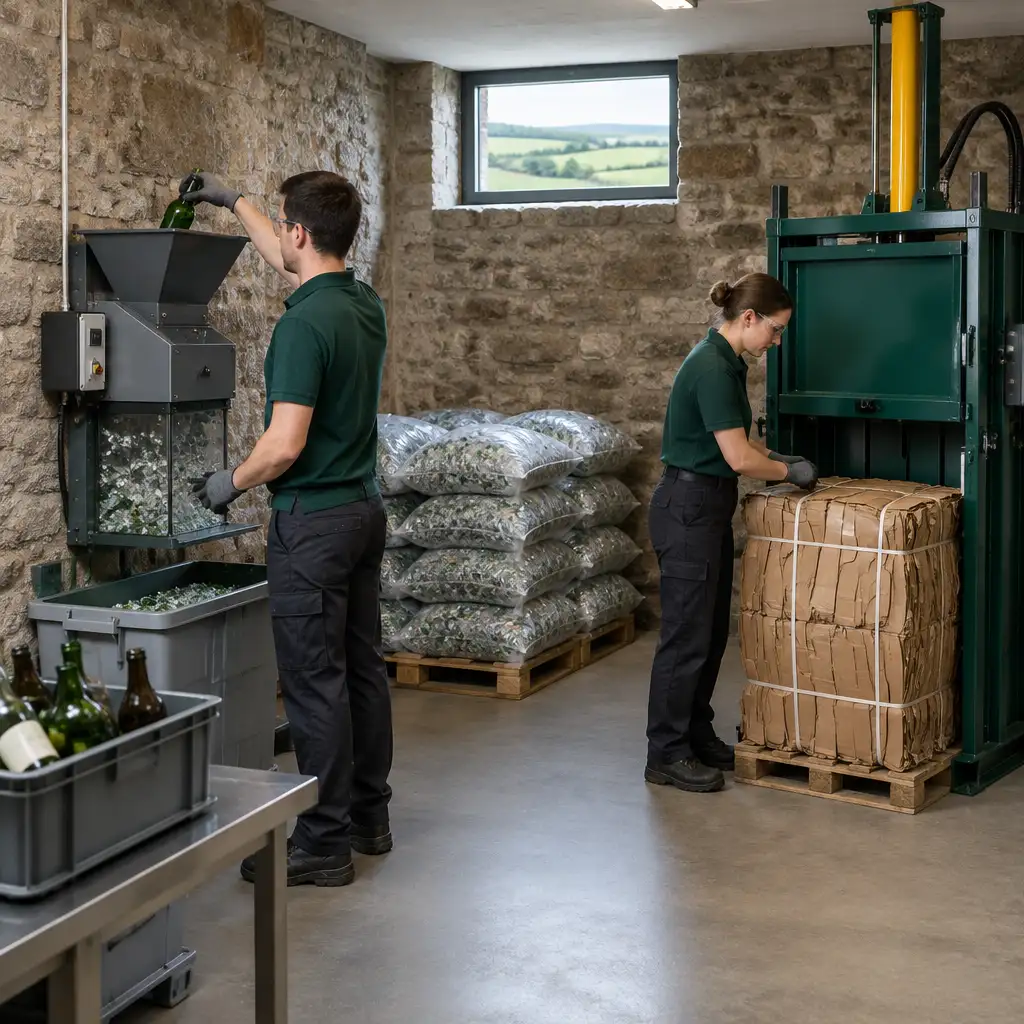
Managing packaging and glass waste is a growing operational challenge for small hospitality sites across Ireland. For pubs, cafés, restaurants and small hotels the twin pressures of limited space and fluctuating volumes make it important to choose waste handling systems that save money without creating new problems. This article explains practical steps to integrate glass crushers and balers on-site and gives straightforward examples of expected savings and simple ROI calculations tailored to Irish businesses.
We focus on realistic, experience-based advice: when to crush glass, when to bale glass or cardboard, how to factor space and hygiene into decisions, and how to train staff safely. The guidance draws on hands-on service and maintenance thinking — repair before replacement — and on solutions suited to typical Irish hospitality layouts.
By the end you will have a clear integration plan you can discuss with suppliers or use during an internal review, plus small case scenarios and seasonal tips to optimise performance through the year. The primary keyword for this piece is Waste Handling Equipment Ireland, and you will find recommended equipment links and service options if you want to take the next step.
- Introduction
- When to use glass crushers
- When to bale glass or cardboard
- Space and hygiene considerations
- Expected savings and simple ROI examples
- Seasonal volume tips and case scenarios
- Operator training and safety guidance
- Frequently asked questions
When to use glass crushers
Glass crushers are compact machines that reduce whole bottles into cullet, dramatically cutting the volume that needs to be stored and collected. They are especially useful where glass return or kerbside collections are infrequent, or where transport costs can be reduced by lowering the number of collections. For many small pubs and restaurants, a bench-top or wall-mounted crusher in the cellar or bin store is a practical upgrade.
Deciding to install a crusher depends on throughput. If your site regularly produces more than a few dozen bottles per week, and you have limited storage space, a crusher will typically pay back through reduced bagged glass collections and fewer bin movements. Crushers also help reduce manual handling of heavy boxes of glass, which is a safety benefit in busy shifts.
However, crushers are less appropriate where glass must be returned whole to a supplier, where strict local recycling contracts require unbroken glass, or where noise and vibration in a sensitive location would be problematic. If you are unsure whether a crusher suits your operation, a short on-site assessment — such as a free machinery assessment — can clarify volumes, timings and practical placement.
When to bale glass or cardboard
Balers compress materials into dense bales for easier handling and lower haulage costs. Cardboard balers are common in restaurants and hotels because cardboard from deliveries accumulates quickly and baling reduces both space and collection frequency. Glass balers are less common in small hospitality sites but can be appropriate where a centralised back-of-house operation handles high volumes of glass.
Choose cardboard balers when cardboard volume is consistent and you have a secure, dry area to store bales. Cardboard balers come in vertical and horizontal formats; vertical balers are often a better fit for constrained back-of-house areas. For advice on machines suited to hospitality sites, review available equipment solutions to match footprint and throughput.
Glass balers can produce stacked, transport-ready bales of glass that recyclers accept. That option makes sense for venues part of a group or cluster collection where a driver or external haulier collects bundled bales. Where throughput is lower, crushing glass first then bagging or storing cullet can be more space- and cost-efficient than a glass baler.
Space and hygiene considerations
Space is usually the deciding factor. Measure your available secure storage and consider how equipment sits within normal workflows — deliveries, service rushes and cleaning. Vertical balers and small crushers have modest footprints but require clearances for operation and servicing. A practical layout minimises the distance staff move waste during peak periods and avoids blocking fire exits or service corridors.
Hygiene must be planned from day one. Balers for cardboard are typically placed in dry, clean areas to prevent contamination of bales, whereas glass crushers should be installed where spillages are easy to clean and away from food prep zones. Regular cleaning protocols and designated PPE (gloves, eye protection for maintenance tasks) reduce contamination risks and are essential for compliance with local health inspections.
Ventilation and noise are other considerations. Crushers can create dust and noise; locate them away from customer areas and fit extraction or dust suppression if required. For small hotels with basement plant rooms, ensure the room has adequate ventilation and that equipment servicing access is not constrained — this reduces downtime and aligns with the practical servicing approach recommended for long-term reliability.
Expected savings and simple ROI examples
Potential savings come from fewer collections, lower landfill or disposal fees, reduced staff time moving waste and improved recycling revenue where glass or cardboard has a positive value. To estimate ROI, start with your current costs: number of collections per month, cost per collection, and staff hours spent handling waste. Compare that to projected costs with equipment: purchase or lease, servicing, and reduced collection frequency.
Example 1 — Small pub: Monthly cardboard and glass collections cost €120. A small crusher costing €2,500 (capital) and reducing glass collections by 50% could save €30–€60 per month on collections and labour. Including servicing and maintenance, simple payback might be 3–5 years depending on your volumes and whether you lease equipment.
Example 2 — Small hotel with steady deliveries: Cardboard collections cost €300 per month. A vertical cardboard baler (new or used) can reduce collections to one every six weeks, saving €150–€200 per month. If the baler is £6,000–€8,000 installed, payback can occur within 2–3 years. These are illustrative; request a machinery assessment to get site-specific numbers and guide repair-versus-replace decisions.
Seasonal volume tips and case scenarios
Hospitality is seasonal. Summer festivals, bank holiday weekends and sport events increase waste, while quieter months see lower volumes. Choose equipment and service plans that scale: temporary hire or short-term increased collections can bridge peak months without committing to unnecessary capital. Baleforce Ireland and similar suppliers offer rental and leasing which can be useful for seasonal spikes.
Case scenario — Weekend pub with match-day peaks: On match days glass throughput may triple. A fixed crusher reduces the need for ad-hoc clearances and keeps the cellar safe. Employ a simple rota where a trained staff member operates the crusher at set intervals and stores cullet in sealed sacks for collection after the weekend.
Case scenario — Small hotel during wedding season: Cardboard from catering and decorations accumulates rapidly over concentrated events. Scheduling baler operation after each event and using short-term extra collections during the busiest months keeps the back-of-house manageable. Planning in advance with your waste contractor and integrating baler use into event checklists prevents last-minute issues.
Operator training and safety guidance
Proper training reduces accidents, equipment misuse and downtime. Training should cover safe operation, basic daily checks, cleaning procedures and what to do in the event of a jam. For balers and crushers, ensure operators understand lockout/tagout procedures and that only authorised staff perform maintenance. Operator training is an investment that increases equipment life and reduces emergency repairs.
Schedule short refresher sessions before busy seasons and when staff turnover is high. Documentation such as simple operating checklists and one-page safety cards work best in hospitality environments where time is limited. Consider adding the equipment to your induction process so new staff know where waste equipment is kept and who to contact for issues.
If you need more technical support, machinery service and repairs teams can provide scheduled servicing and operator training packages. Regular servicing prevents costly breakdowns and aligns with the repair-before-replacement philosophy: maintain what you have first, upgrade when it makes sense, replace only when justified by safety or reliability concerns.
Frequently asked questions
Q: How do I decide between buying and leasing a crusher or baler?
A: Consider cashflow, seasonal demand and how long you expect to use the equipment. Leasing or rental suits short-term or seasonal spikes; purchase often pays off over several years for consistent year-round volumes. Ask for lifecycle cost estimates and include maintenance and servicing in calculations.
Q: Will a crusher or baler require a lot of maintenance?
A: All machinery requires regular servicing. Crushers need periodic cleaning and wear-part checks; balers need hydraulic and safety system inspections. Preventative maintenance reduces breakdowns and overall cost of ownership. For support, look for suppliers offering planned maintenance and rapid response for emergency repairs.
Q: Can small hospitality sites get help choosing the right equipment?
A: Yes. A site visit or free machinery assessment can clarify throughput, space constraints and likely savings. Suppliers can then recommend suitable equipment sizes, whether a crusher or baler (or both) is appropriate, and outline installation and training requirements. That step helps avoid buying the wrong machine for your needs.
Not sure whether your equipment should be repaired, upgraded, or replaced? Baleforce Ireland offers honest, practical advice backed by over 20 years of industry experience. We focus on helping customers make informed decisions based on safety, reliability, and long-term value. Contact us at 087 458 0610 or info@baleforceireland.ie to discuss your options.