
Introduction
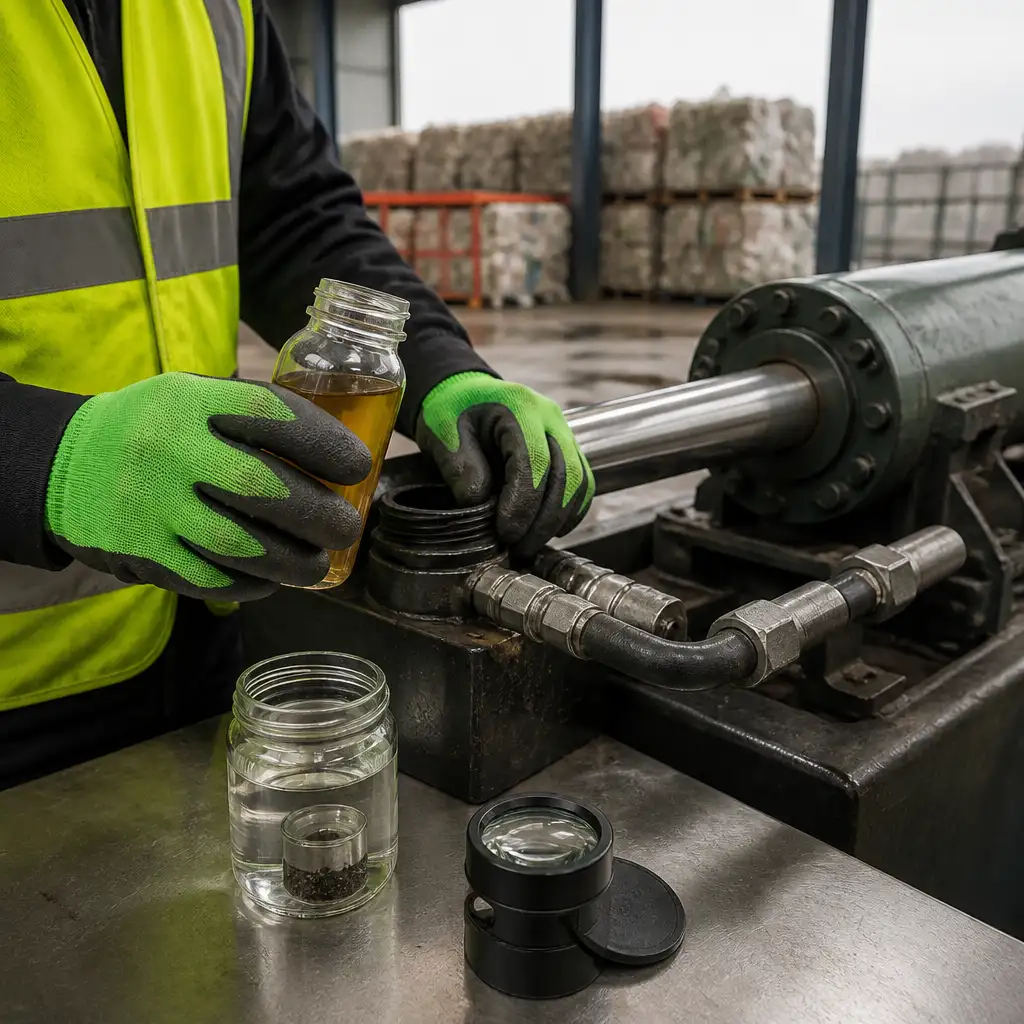
Hydraulic faults are among the most common causes of baler downtime. In compacting and baling equipment a small seal failure, contaminated fluid or a worn pump can quickly escalate into a costly breakdown that affects productivity and safety. This guide focuses on practical, technically-sound steps that Irish facilities can use to keep hydraulic circuits healthy and avoid premature pump and cylinder failure.
We cover the essentials of fluid selection, contamination control, seal inspection, filter maintenance and simple onsite repairs. The approach is technical but accessible: it explains what to look for, when to act, and how routine checks can prevent many failures without specialist intervention.
Whether you operate a cardboard baler in a retail distribution centre, a large industrial baler in manufacturing, or run balers across multiple sites, these maintenance routines will help you reduce downtime, improve reliability and make informed decisions about repairs versus replacement.
- Introduction
- Hydraulic basics for baler maintenance
- Choosing and managing hydraulic fluid
- Contamination control and cleanliness
- Seal and cylinder inspection: what to look for
- Filters, breathers and scheduled changes
- A step-by-step routine inspection and maintenance schedule
- Frequently asked questions
Hydraulic basics for baler maintenance
Understanding the basic components of a baler hydraulic circuit helps prioritise checks. A typical system includes a reservoir, pump, pressure relief and control valves, directional valves, cylinders, hoses and filters. Most failures trace back to either contamination, fluid deterioration, or mechanical wear in pumps and seals.
Pumps are sensitive to contamination and aeration; seals are sensitive to wear, abrasion and chemical attack from wrong fluids. Early signs—such as slow cylinder movement, internal leaks (loss of holding pressure), excessive noise or cavitation—should trigger a targeted inspection rather than waiting for a catastrophic failure.
Regular, simple checks will identify issues while they are small. These checks are inexpensive, quick to perform and will often avoid expensive pump rebuilds or cylinder replacements.
Choosing and managing hydraulic fluid
Selecting the correct hydraulic oil is fundamental. Use the fluid grade recommended by the baler manufacturer or equipment supplier; Europress manuals or the machine data plate typically specify viscosity and additives. Incorrect viscosity affects pump lubrication and valve timing, while incompatible additives can degrade seal materials.
In Ireland’s varied operating environments, consider ambient temperature when choosing viscosity. Low temperatures slow flow and increase pump load; high temperatures reduce oil life. Synthetic or anti-wear hydraulic oils may be appropriate for high-duty applications, but confirm seal compatibility first.
Management practices matter as much as choice. Keep reservoirs topped to the correct level with clean fluid, avoid mixing brands unless compatible, and record fluid top-ups and changes. For busy sites consider routine oil analysis (annual or biannual) to check for contamination, water content and wear metals—this can indicate early pump wear or external contamination sources.
Contamination control and cleanliness
Contamination is the single largest factor in hydraulic component wear. Particles cause abrasive wear on spool valves, pumps and cylinder bores; water causes corrosion and accelerates additive depletion. Implementing contamination control reduces wear dramatically.
Practical steps: fit good quality breathers on reservoirs, keep filler caps and breather housings clean, and use a funnel with a fine filter when topping up. Ensure replacement fluid is dispensed from sealed containers and keep spares in a clean, dry location.
Filtration should be appropriate for the system. Many balers operate well with 10–25 micron filtration on return lines; if your system is sensitive, fit finer filters or a kidney loop. Regularly monitor filter condition (pressure differentials if fitted) and replace elements before they become saturated and bypass contaminant back into the system.
Seal and cylinder inspection: what to look for
Seals fail for a few clear reasons: abrasive particles, extrusion from overpressure, chemical swelling from incorrect fluids, and age-related hardening. A systematic visual and tactile inspection will pick up most problems before they become consequential.
Inspection checklist: look for external leaks at rod glands and fittings, score marks on piston rods, blistering or swelling of rubber seals, and oil migration on cylinder bodies. Also check for misalignment or bent rods which cause uneven seal wear. Small weeps of oil under load can indicate a failing rod seal; sudden loss of holding pressure normally points to internal leakage past piston seals.
When replacing seals, use the correct material (nitrile, Viton, polyurethane, etc.) as specified. Document seal materials and replacement dates so you can correlate failures with fluid types, operating temperature and duty cycles.
Filters, breathers and scheduled changes
Filters are the frontline defence. Create a schedule based on hours of operation, contamination severity and manufacturer recommendations. For typical baler use we advise weekly visual checks, monthly element inspections, quarterly change for heavily used machines and six- to twelve-month changes for lower duty equipment—adjusted by oil analysis results.
Always replace breathers and return-line elements at scheduled intervals. When fitting a new filter element, follow torque and sealing procedures carefully to avoid leaks. Keep a stock of recommended filter part numbers so changes can be completed quickly and correctly.
Record filter changes and any pressure differential readings. If a filter is clogging rapidly, investigate the contamination source rather than only increasing change frequency: common causes include dirty fillers, pump wear producing metal fines, or a compromised reservoir seal allowing ingress.
A step-by-step routine inspection and maintenance schedule
Below is a practical routine you can adopt on-site. The routine mixes daily operator checks with weekly and monthly maintenance so issues are found early without excessive downtime.
Daily (operator): visual checks for external leaks, unusual noises during operation, smooth cylinder movement, correct system pressure on the gauge and clean control panels. Operators should report any change immediately and record it in the machine log.
Weekly (technician): check reservoir level and look for oil foaming or discolouration, inspect hoses and fittings for chafing and tightness, check breather condition and remove surface sludge in the reservoir if present.
Monthly: inspect filter elements and replace if contaminated, measure and record pressure readings under normal load, and perform a basic seal inspection on exposed rods and cylinders.
Quarterly to annual: carry out oil sampling and analysis, change hydraulic oil if analysis recommends or if the oil is oxidised, and perform a more thorough pump and valve inspection. For service or complex diagnosis contact our team for specialist support; Baleforce Ireland provides free machinery assessment to help prioritise repairs versus upgrades.
Troubleshooting common faults and simple onsite repairs
Many faults can be diagnosed with a structured approach. Start with simple checks: confirm correct fluid level, check filters, inspect for external leaks and listen for unusual pump noise. Use pressure gauges to compare actual readings with expected values under load.
Common signs and likely causes:
- Slow cylinder movement: low pump flow, aeration, incorrect fluid viscosity or partial blockage in return filters.
- Loss of holding pressure: worn piston or spool seals, internal leakage in directional valves.
- Excessive pump noise or cavitation: low suction head, contaminated suction strainer, or worn pump internals.
- External leaks: failed rod gland seals, loose fittings or damaged hose assemblies.
Simple onsite repairs often include replacing a leaking rod seal, fitting a new return filter element, tightening fittings with the correct torque, and topping up with the correct hydraulic oil. Replace hoses showing chafe or visible damage. Always follow lockout procedures and depressurise the circuit before working on hydraulics.
For complex faults—pump rebuilds, internal valve servicing, or suspected contamination from pump wear—call for professional intervention. Our machinery service and repairs team supports emergency baler repairs and planned maintenance across Ireland and can advise on repair versus replacement strategies that favour long-term value.
Frequently asked questions
Q: How often should hydraulic oil be changed in a baler?
A: Change intervals depend on duty and contamination levels; typical guidance is annual oil analysis with an oil change every 12–24 months for moderate use. High-duty or contaminated systems may require more frequent changes following analysis results.
Q: What are the quickest signs that a pump is failing?
A: Common early indicators are increased noise (whine or knocking), rising oil temperature, reduced system pressure under load and metal particles in the oil sample. Address these promptly to avoid larger failures.
Q: Can my operators perform hydraulic checks safely?
A: Yes. Operators can and should do daily visual checks, listen for abnormal sounds and report leaks or performance changes. Any work requiring system depressurisation, seal changes or component replacement should be done by trained technicians following lockout procedures.
Need support with waste handling equipment anywhere in Ireland? Baleforce Ireland provides nationwide service, repairs, machinery assessments, upgrades, operator training, and technical support, with faster response times throughout Leinster. Call 087 458 0610 or email info@baleforceireland.ie to get started.