
Introduction
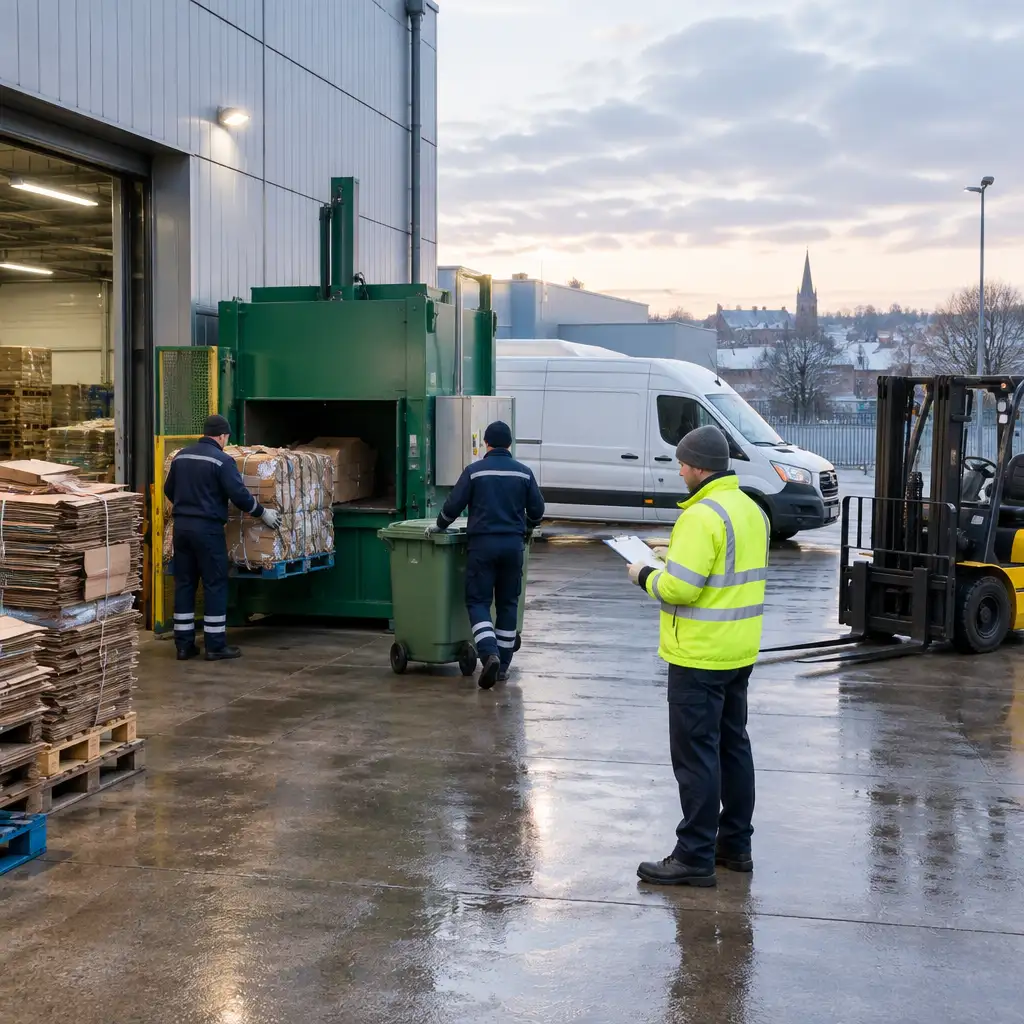
Seasonal peaks — Christmas trading, Bank Holiday weekends, sporting events and local festivals — regularly push Irish retailers and hospitality operators beyond their daily waste-handling capacity. When volumes spike, the risk is not only overflowing bins and unhappy customers but increased disposal costs, safety hazards and a higher chance of equipment breakdown. This article sets out practical tactics to manage those surges without resorting to unnecessary replacement of plant.
We will look at short-term solutions such as temporary hire, changes to staff rotas and shift patterns, throughput protocols for operators, and crucially the timing of maintenance and servicing so machines remain reliable through a busy period. Baleforce Ireland’s approach is always repair-first and pragmatic: the goal is to keep equipment safe and operational while controlling costs over the short and long term.
Later sections include case examples from typical Irish peak periods, a simple cost-comparison approach (hire vs overtime), recommended pre-peak maintenance checks, and operator practices that reduce misuse and downtime. Where relevant, links to further service and equipment information are provided so facilities managers can act quickly.
- Introduction
- Recognising seasonal waste surges and their impacts
- Temporary hire and rental options: when to choose hire
- Shift patterns and staffing: planning for peaks
- Maintenance scheduling and pre-peak checks
- Operator practices to protect throughput and safety
- Cost comparisons: hire vs overtime
- Frequently asked questions
Recognising seasonal waste surges and their impacts
Seasonal surges vary by sector. Supermarkets and delivery centres see a steady rise in cardboard during the run-up to Christmas; pubs, restaurants and hotels encounter sudden peaks on Bank Holiday weekends and during major sports fixtures; event caterers face concentrated high-volume days. Recognising the pattern for your business is the first step in planning equipment and labour needs.
Impacts are both operational and financial. Overflowing waste streams create housekeeping and health risks, increase collection frequencies and disposal costs, and place extra strain on balers and compactors. If a compactor is overworked without adequate servicing it can overheat, suffer hydraulic leaks or fail safety systems — leading to emergency downtime and potentially high repair costs.
Monitoring baseline volumes throughout the year and identifying predictable peak windows allows you to put proportionate measures in place. Simple measures such as scheduling extra collections, adding temporary skid-steer bins or hiring a short-term compactor can be far more cost-effective than emergency repairs or replacement after a breakdown.
Temporary hire and rental options: when to choose hire
Temporary hire is often the quickest way to absorb peak waste without disrupting permanent workflow. Rental compactor units or standalone balers can be placed on-site for a week or several weeks, giving immediate capacity and protecting installed equipment from overuse. Baleforce Ireland provides hire solutions for breakdown cover and temporary requirements as part of a practical contingency plan.
Deciding when to hire depends on predictable demand, available storage for bales, and the cost of alternative measures such as additional collections or overtime. For events or short Bank Holiday spikes, hire can prevent overflow and limit labour pressure. For multi-week seasonal runs like Christmas, hire combined with adjusted shift patterns is often the most resilient solution.
When arranging hire, consider delivery and pickup windows, safe siting of the hire unit, power or hydraulic connections where relevant, and the availability of a trained operator. If you anticipate repeated seasonal hires, discuss longer-term leasing or a standby agreement to secure units and reduce mobilisation lead-times.
Shift patterns and staffing: planning for peaks
Labour planning is as important as plant. Options include staggered shifts to spread waste processing through quieter times of day, bringing in temporary staff for sorting and compaction tasks, or offering overtime to existing trained staff. Each approach has trade-offs: overtime can be quicker to arrange but may increase fatigue; temporary staff require supervision and short training; staggered shifts require rota coordination and may increase supervision costs.
For hospitality venues, consider whether back-of-house operations can be scheduled outside peak customer-facing periods. For retail distribution or supermarkets, a morning sweep and compaction schedule can absorb overnight accumulations and reduce pressure during busy trading hours. Document simple duties for each shift to avoid inconsistent practices that stress equipment.
When using temporary or overtime staff, invest a short induction focused on safe operation of balers and compactors and basic troubleshooting. Operator competence reduces misuse and is one of the most cost-effective ways to avoid faults that lead to downtime.
Maintenance scheduling and pre-peak checks
Maintenance timing is critical. A pre-peak service performed within two to six weeks before a known surge can significantly reduce the risk of failure during the busiest period. For businesses that rely on compactors, consider booking a servicing slot early — Baleforce Ireland’s maintenance contracts are structured to prioritise preventative work that keeps throughput stable and downtime low.
Recommended pre-peak checks include: hydraulic oil level and contamination check; hose and fitting inspection for wear or chafing; cylinder seals and ram condition; control panel and safety interlocks testing; emergency stop and lock-out/tag-out procedures verification; sensor alignment and cabling inspection; and a full functional test under load. These checks are practical, quick to perform and highlight issues that can be addressed before peak demand.
If you have no in-house maintenance capacity, schedule a free machinery assessment well in advance of your peak. Early detection of marginal items allows for planned repairs or short-term hire while repairs are completed. For urgent failures during a surge, our breakdown and emergency repairs service provides rapid response and practical solutions to get you back online.
Operator practices to protect throughput and safety
Consistent operator behaviour preserves machine life and throughput. Key practices include loading the compactor evenly, avoiding overfilling the hopper, not compacting forbidden materials (electrical items, hazardous waste), and ensuring bales are tied or secured correctly to prevent rework. Simple visual checks at shift start and handover catch problems early.
Operator training should cover safe start-up and shutdown sequences, recognising the signs of hydraulic strain (slow ram, overheating), basic daily maintenance (cleaning debris, checking for leaks), and when to escalate issues. Formal short sessions reduce guesswork and misuse, improving reliability and safety.
Record-keeping is also valuable. A brief daily log noting cycles processed, any faults, and oil or temperature observations gives engineers a history to work from during servicing. These small operator-led steps support longer equipment life and fewer emergency call-outs.
Cost comparisons: hire vs overtime
When planning for a peak, two common options are hiring temporary equipment or paying overtime to process the increased waste through existing plant. The right choice depends on duration, available staff, equipment condition and disposal costs. Below is a simplified comparative example to aid decision-making; treat figures as illustrative and obtain site-specific quotes.
| Option | Typical benefits | Typical drawbacks |
|---|---|---|
| Short-term hire (compactor/baler) | Immediate extra capacity; protects installed plant from overload; predictable hire fee | Logistics for placement; hire mobilisation cost; temporary storage or power needs |
| Overtime to process through existing equipment | No hire logistics; uses installed capacity; staff familiar with site | Higher hourly labour cost; risk of fatigue-related errors; increased wear on plant |
Example calculation (illustrative): if overtime costs €30–€45/hr per worker and you need two operators for six extra hours per day over a five‑day peak, labour alone could be €1,800–€2,700 for the week. A short-term hire for the same period might be quoted at a flat fee—in some cases making hire cheaper and less disruptive. Obtain quotes for both labour and hire and include indirect costs: extra waste collections, increased disposal charges, and risk of equipment failure.
Where a business repeatedly sees the same seasonal peaks, consider a standby hire or a leasing arrangement to smooth costs and guarantee availability. Discuss options with your supplier so you can balance repair-first philosophy with the need for resilient temporary capacity.
Frequently asked questions
Q: How far in advance should I schedule servicing before a Christmas peak?
A: Aim to schedule a pre-peak service two to six weeks before the expected peak. This gives time to complete minor repairs and arrange hire if necessary.
Q: Is temporary compactor hire suitable for city-centre hotels during Bank Holiday weekends?
A: Yes. Short-term hire can provide immediate capacity without disturbing permanent plant, but confirm siting, access for collections and power requirements in advance.
Q: What simple daily checks can operators do to reduce breakdown risk?
A: Daily checks should include visual inspection for leaks, checking hydraulic oil levels, ensuring sensors and safety guards are clear, and noting unusual noises or slow ram performance. Record findings in a brief log and escalate persistent issues.
Need support with waste handling equipment anywhere in Ireland? Baleforce Ireland provides nationwide service, repairs, machinery assessments, upgrades, operator training, and technical support, with faster response times throughout Leinster. Call 087 458 0610 or email info@baleforceireland.ie to get started.