
Introduction
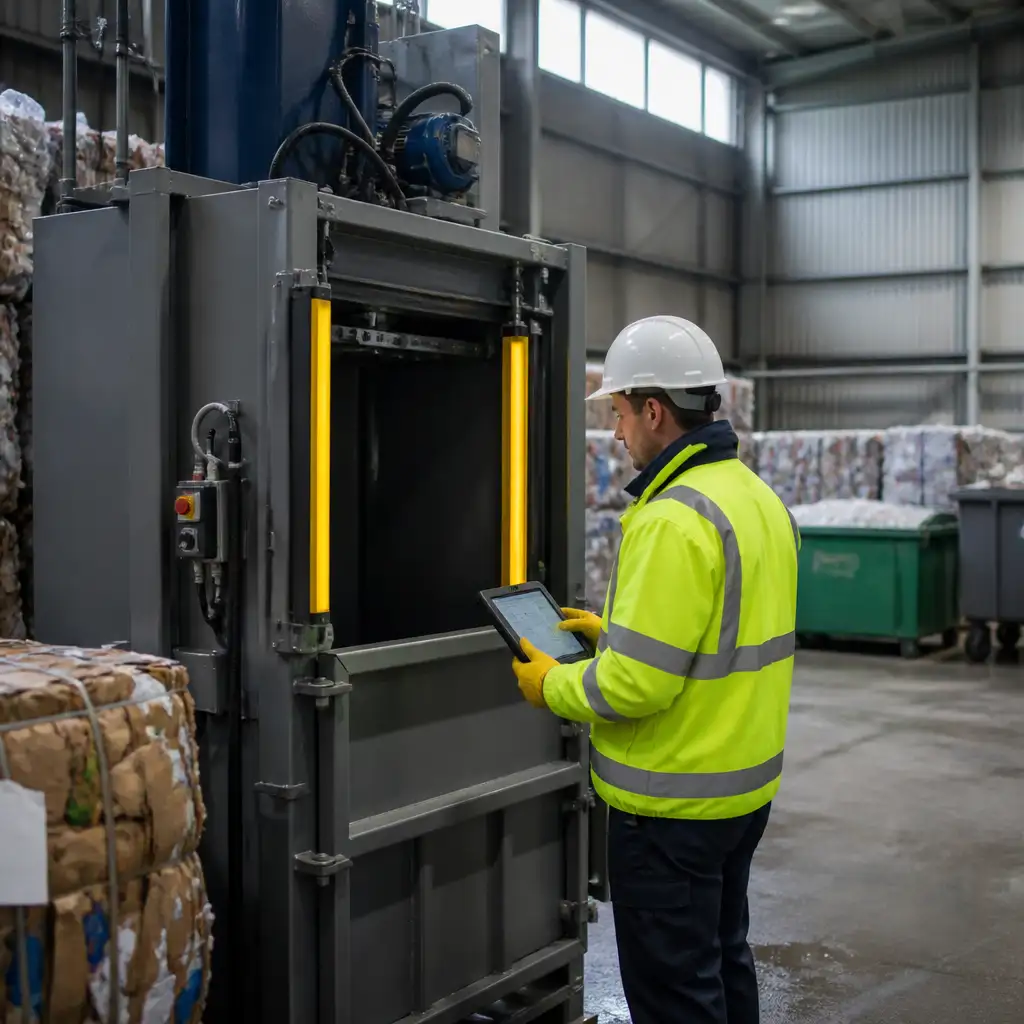
Balers and compactors are essential in many Irish businesses for managing waste and recycling, but they also present significant hazards if not managed correctly. This guide explains what the Health and Safety Authority (HSA) expects of operators and facilities managers in Ireland, and translates those expectations into plain-English checks, documentation requirements and practical retrofit options for older machinery.
Whether you run a warehouse, retail centre, hotel or manufacturing site, keeping your balers and compactors safe is both a legal duty and a sensible way to reduce downtime and repair costs. This article focuses on baler safety Ireland standards, common non-compliances we see in the field, and clear steps to bring equipment into line with HSA expectations.
We cover daily and periodic checks, the paperwork you should keep, retrofit examples that work on older machines, and a practical decision framework: repair, upgrade or replace. If you need hands-on help, Baleforce Ireland provides assessments and nationwide servicing to support compliance and reliability.
- Introduction
- HSA expectations for baler safety in Ireland
- Daily and pre-use safety checks
- Periodic inspections, servicing and documentation
- Common non-compliances and retrofit solutions
- Bringing older machines into compliance: practical decision framework
- Training, signage and operator controls
- Frequently Asked Questions
HSA expectations for baler safety in Ireland
The HSA expects employers and duty-holders to identify hazards, assess the risks, and implement suitable controls to prevent accidents. For balers and compactors this means safe guarding, clearly defined isolation procedures, and reliable emergency-stop and interlock functions. Risk assessments should be site specific and account for the tasks operators perform and the materials being processed.
Key HSA priorities include guarding to prevent access to dangerous parts, preventing unintended machine start-up during maintenance, and ensuring control systems are appropriate for the machine’s risk profile. The HSA also emphasises the need for competent personnel to carry out servicing and for written procedures that are kept up to date.
It is important to view these expectations as a practical safety standard rather than an abstract checklist. Regular, documented checks and sensible physical upgrades can often close the compliance gap without wholesale replacement of proven equipment.
Daily and pre-use safety checks
Daily inspections are the simplest and most effective way to prevent incidents. Before each shift, operators should run a short pre-use check to confirm controls, guards and safety devices are functioning. These checks are quick to train and pay for themselves in reduced downtime and fewer near-misses.
Use a concise daily checklist and keep a signed log. A typical pre-use checklist for balers and compactors might include: visual condition of guards and interlocks, emergency-stop operation, control panel indication, hydraulic fluid leaks, and ensuring no tools or foreign objects remain in the machine. Train operators to report any faults immediately.
Sample daily checklist (short):
- Are all guards and hatches closed and secured?
- Do emergency stops operate correctly and reset only as intended?
- Is there evidence of hydraulic or electrical leaks?
- Are controls labelled and working as expected?
- Is the work area clear and free of trip hazards?
Periodic inspections, servicing and documentation
Beyond daily checks, the HSA expects a programme of periodic inspection and maintenance carried out by competent persons. This should include mechanical, hydraulic and electrical checks at defined intervals and after any major repair. Records of inspections, repairs and risk assessments should be kept for audit and internal review.
Maintain a service log that records dates, work carried out, parts replaced and the name of the person or company who performed the work. Keeping good records not only demonstrates due diligence but also helps spot wear trends and schedule preventative maintenance more effectively.
Baleforce Ireland offers machinery service and repairs across the country, and our technicians can document work to a standard that meets HSA expectations. For a full equipment review consider arranging a free machinery assessment to agree a remedial plan and servicing schedule.
Common non-compliances and retrofit solutions
Older balers and compactors frequently lack modern safety devices or have worn interlocks. Common non-compliances include missing or bypassed guards, inadequate isolation procedures, poor electrical protection and absence of safety-rated controls. Fortunately, many of these faults are fixable with practical retrofits.
Examples of effective retrofit options:
- Light curtains or area scanners to protect feed openings where physical guarding is impractical.
- Safety-rated PLCs and safety relays to ensure reliable shutdown and controlled restart.
- Mechanical and electrical interlocks on access hatches and maintenance panels to prevent energised operation during servicing.
- Pressure relief and cushioning systems to reduce the risk of crushing during hydraulic failures.
- Upgrade emergency-stop layouts and install dual-channel wiring for critical safety circuits.
Each retrofit should be chosen based on the machine’s condition and risk assessment. Retrofits are often far more cost-effective than replacement and can extend the working life of reliable equipment when performed by experienced technicians.
Bringing older machines into compliance: practical decision framework
When you find safety issues on older equipment, apply a pragmatic decision framework: repair if practical, upgrade if beneficial, replace when justified. The balance depends on safety impact, machine condition, downtime costs and lifecycle value.
Start with a free machinery assessment to identify immediate safety risks and estimate remediation costs. If the machine has a sound mechanical base, targeted retrofits and a planned maintenance programme can deliver compliance and long-term value. Where controls are obsolete or structural damage exists, replacement should be considered.
Document the rationale for your decision. A clear record showing why a repair or upgrade was chosen over replacement demonstrates responsible management and can be useful during inspections or insurance enquiries. If needed, Baleforce Ireland can assist with assessments and provide costed options for repair, upgrade or replacement.
Training, signage and operator controls
Technical fixes are only part of compliance. The HSA expects employers to ensure operators are competent and that safe systems of work are in place. That means structured training, written procedures and clear signage where risks remain.
Training should cover safe start-up and shutdown, isolation and lock-out procedures, safe feeding methods, daily checks and how to recognise faults. Use simple, site-specific operating procedures and ensure refresher training is provided after changes to equipment or personnel.
Good signage and labelling help reinforce safe behaviours. Label controls, show isolation points clearly, and post emergency procedures nearby. Where appropriate, combine training with supervised practice sessions until competence is demonstrated.
Frequently Asked Questions
Q: What specific documentation should I keep to show compliance with HSA guidance?
A: Keep risk assessments, maintenance and service logs, inspection checklists, training records and records of any modifications or retrofits carried out. These documents show due diligence and make audits straightforward.
Q: Can older balers be retrofitted to meet current safety standards, or do they usually need replacement?
A: Many older balers can be upgraded with safety PLCs, interlocks, light curtains and improved guarding to meet HSA expectations. A free machinery assessment will identify whether repair and retrofit are practical or if replacement is the safer option.
Q: Who should I call for emergency repairs or breakdowns outside normal hours?
A: For urgent situations use an experienced service provider with breakdown support. Baleforce Ireland provides breakdown and emergency repairs nationally and faster response times within Leinster; keep an emergency contact list and supplier details in your critical-asset folder.
Need support with waste handling equipment anywhere in Ireland? Baleforce Ireland provides nationwide service, repairs, machinery assessments, upgrades, operator training, and technical support, with faster response times throughout Leinster. Call 087 458 0610 or email info@baleforceireland.ie to get started.