
Using Hire Compactors and Balers to Maintain Business Continuity During Breakdowns: A Practical Guide for Irish Facilities
 Introduction
Unexpected baler or compactor failures are disruptive for any business that relies on continuous waste handling — from manufacturing lines and warehouses to retail stores and hotels. This guide explains how facilities managers and operations teams in Ireland can arrange short-term compactor and baler hire to keep waste systems running while repairs are carried out.
We cover the practical steps: choosing the right hire machine, preparing the site and workforce, managing transport and installation logistics within Ireland, comparing hire with leasing costs, typical hire durations, compliance considerations and coordinating with repair teams to minimise downtime. The focus is on real-world advice you can apply immediately.
Baleforce Ireland provides nationwide support, with faster response times across Leinster, and this article draws on field experience and straightforward checklists to help you make decisions that keep operations moving and maintain safety and compliance.
- Introduction
- Selecting the Right Hire Machine
- Site and Safety Preparation
- Transport and Installation Logistics in Ireland
- Cost Comparison: Hire vs Leasing
- Typical Hire Durations and Scheduling
- Compliance and Safety Considerations
- FAQs
Selecting the Right Hire Machine
First, identify what type of machine will replace your faulty unit for the short term. Ask: is the failure on a baler or a compactor? What materials does it process — cardboard, plastic, general waste, or glass? Matching capacity and feed type is essential to avoid creating secondary problems such as overfilling or sorting bottlenecks.
When evaluating hire options, confirm throughput, chamber size, and power requirements. A compact baler with lower throughput may be fine for a small retail backroom, but a distribution centre will need a high-throughput machine to prevent collection build-ups. For compactors, check skip capacity and whether the hired unit is self-contained or requires external containers.
Use equipment comparisons to shortlist machines. If you’re unsure, book a free machinery assessment to confirm what temporary replacement is appropriate. The assessor will advise on machine type, likely connection requirements and estimated installation time.
Site and Safety Preparation
Prepare the site before the hire unit arrives. Clear the access route, measure doorways and yard spaces, and ensure there is adequate floor loading capacity. Many last-minute delays are caused by blocked access or incorrect measurements.
Safety preparation must include isolating the area where the hire machine will operate, marking pedestrian routes, and ensuring emergency stops and safety zones are unobstructed. Provide the hire company with a site contact who can authorise access and confirm lift or ground-handling arrangements.
Prepare a short site briefing for operators and contractors. Include machine-specific hazards, waste segregation rules, and contact details for the repair team. Consider scheduling a brief operator induction, especially if the hire machine differs from your usual equipment; safe operation reduces the chance of damage during the hire period.
Transport and Installation Logistics in Ireland
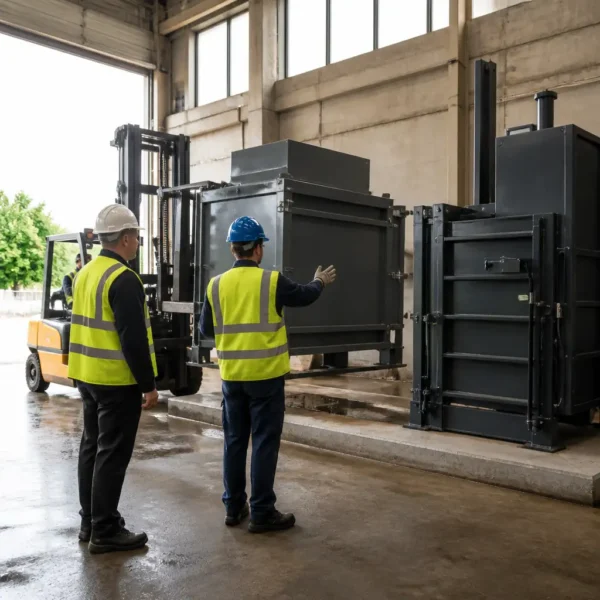
Transport and installation are where timelines often slip. Confirm lead times with the hire supplier and whether delivery includes a trained technician for installation and commissioning. In Ireland, travel time matters: firms in Leinster commonly get faster response times, while deliveries to the west or north may need additional scheduling allowance.
Check electrical and hydraulic hook-ups in advance. Many hired compactors require a dedicated power supply; some balers may need a three-phase feed. Have your site electricians available or briefed so connections can be made promptly on arrival. If crane or forklift access is required for placement, book those services well in advance.
Document arrival and handover: record serial numbers, operational checks completed, and any pre-existing damage. This protects your organisation and ensures the hire company knows the machine is functioning correctly on handover. Agree collection logistics too — returning machines outside normal hours can incur additional charges.
Cost Comparison: Hire vs Leasing
Deciding between short-term hire and leasing depends on expected repair duration, cash flow, and longer-term needs. Hire is typically best for temporary cover during repairs. Leasing can be more cost-effective for predictable medium-term needs but may involve longer agreement terms and maintenance obligations.
Below is a sample cost comparison table for a hypothetical mid-size compactor or baler. Adjust figures to reflect actual supplier quotes and any transport or installation fees your provider charges.
| Item | Short-term Hire (per week) | Leasing (monthly equivalent) | Notes |
|---|---|---|---|
| Mid-size compactor | €350 | €950 | Hire covers delivery & collection; leasing spreads cost over term |
| Medium baler | €300 | €850 | Operator training may be included with lease |
| Delivery & installation (one-off) | €120–€300 | Usually included or spread in lease | Depends on distance and site work |
| Insurance / damage liability | Variable | Often included in lease package | Check T&Cs |
Use this table to run a simple break-even analysis: if expected downtime is less than the period where leasing becomes cheaper, hire is usually preferable. Also factor in the operational cost of missed collections, skip hire fees and labour downtime when making the decision.
Typical Hire Durations and Scheduling
Short-term hire for breakdown cover typically ranges from one week to three months depending on parts lead times and repair complexity. For simple electrical or hydraulic repairs, hires of one to four weeks are common. For major rebuilds where parts are on order, hires can extend to several months.
When planning, align hire duration with repair milestones. Split the hire into phases: immediate cover (first 1–2 weeks), mid-term cover while awaiting parts and long-term interim solutions if repairs are extended. This phased approach reduces unnecessary cost and allows easier adjustments if repair timelines change.
Book hire machines with flexible terms where possible. Confirm cancellation policies and any penalties for extending the hire. Because Baleforce Ireland offers nationwide support and faster Leinster response, you may be able to secure shorter lead times for delivery and collection in the east of the country, which helps reduce hire duration and cost.
Compliance and Safety Considerations
Even for temporary hire units, compliance with safety standards and waste regulations in Ireland remains your responsibility. Ensure the hired machine has current safety documentation, CE marking where applicable, and a valid inspection record. Check the hire company provides information on guarding, emergency stops and lock-out procedures.
Confirm waste handling controls are maintained. If the hire compactor changes the way waste is stored or compacted, update your waste management plan and notify contractors where required. In some sectors, such as food manufacturing and hospitality, hygiene controls and pest prevention measures must be maintained around temporary machinery installations.
If you have safety concerns or need guidance on whether to repair or replace, consider arranging a machinery assessment or contact the service team for advice on safe temporary operation. Regular servicing and adherence to manufacturer guidelines reduce the chance of repeat failures; view our pages on machinery service and repairs for preventative options.
FAQs
Q: How quickly can I arrange a compactor hire in Ireland?
A: Short-term hire can often be arranged within 24–48 hours depending on location and machine availability. Leinster locations frequently get faster response times; nationwide deliveries may take slightly longer depending on access and scheduling.
Q: Will the hire company install and commission the machine?
A: Most reputable hire providers include delivery and basic commissioning. Confirm whether electrical or hydraulic connections are included and whether a trained technician will be present for handover. Always document the handover inspection.
Q: Should we repair our existing machine or replace it if breakdowns are frequent?
A: Follow a repair-before-replacement approach: have a qualified assessment to identify root causes, estimate repair cost and expected life after repair. If repeated failures continue or safety/compliance cannot be maintained, replacement or an upgrade can be considered. A free machinery assessment helps with that decision.
Need support with waste handling equipment anywhere in Ireland? Baleforce Ireland provides nationwide service, repairs, machinery assessments, upgrades, operator training, and technical support, with faster response times throughout Leinster. Call 087 458 0610 or email info@baleforceireland.ie to get started.